COURT CLERK INSIDER REVEALS CORRUPTION IN NJ CIVIL COURTS

Standard

READ FULL ARTICLE FROM NJ.COM HERE:

Clerk says fix was in on judge’s cases; judge calls allegations ‘baseless’ | NJ.com.


ALSO READ FEDERAL COMPLAINT REGARDING COURT CORRUPTION IN MORRIS COUNTY HERE:

Dearie-v-Gannon FEDERAL COMPLAINT- A 42 PAGE COMPLAINT THAT IS TERRIBLY DISTRESSING AND CONCERNING TO READ IN FULL… ITS A PAGE TURNER!!!


We have often wondered why New Jersey Court insiders so rarely blow the whistle, on the corruption within the courts.

The experience of Morris County Clerk John Dearie appears to answer that question.

It appears that court officers and judges will immediately abuse their offices and retaliate against lawful persons with just consciences and immediately victimize the party attempting to uphold the rule of law within the court house.

IN THE LINKED ARTICLE:  (ABOVE) we learn that there was a clerk in Morris County who witnessed a Judge (Gannon) who repeatedly violated the rights of litigants by ruling on motions without reviewing the papers, signed orders prior to oral arguments (ruling on the matter before it was heard) and as if that wasn’t enough the Judge apparently (based on Mr. Dearie’s recent federal court complaint) admitted to profiteering from his post and enriching his own political allies. Further it appears – based on the complaint filed in Federal Court (as if this isn’t bad enough) Judge Gannon sexually harrassed law clerks and made inappropriate / sexually motivated advances toward parties litigating in his court.

The law clerk’s complaint details in excruciating detail how the ACJC and the supervising Judges failed to address manifest and massive injustice in Morris County’s civil courts.


While we would like to speak and report on this story after getting additional information from the whistle blowing law clerk that currently appears to be impossible…..


because

shortly after filing his complaint THE LAW CLERK WAS SENT TO A MENTAL HOSPITAL AGAINST HIS WILL, PRESUMABLY AS A RESULT OF A COURT ORDER DESIGNED TO SMEAR THE LAW CLERKS NAME AND IMPEDE HIS ABILITY TO CONTINUE WITH HIS LAWSUIT.

SEE THE OUTRAGEOUS JUDICIAL MISCONDUCT ALLEGED BY THE LAW CLERK HERE:


THIS IS A COMMON TACTIC IN FAMILY COURT AND CIVIL COURTS… the courts will smear the mental competence of an innocent litigant or party in order to discredit their justifiable outrage.

SUPPORTING EVIDENCE AND LINKS:

In fact as readers of this news website know this exact circumstance occurred in Mr. Derek Syphrett’s legal affairs, where he was declared incompetent / assigned counsel against his will without a hearing or evidence being admitted into the court case of FM-11-97-000011K… Judge Fitzpatrick actually declared Mr. Syphrett legally incompetent after Mr. Syphrett won his prior motion which was written pro se by Mr. Syphrett, then acting as Attorney in Fact for the matter… a few months later the court appointed counsel filed emergent motions to be released only after Mr. Syphrett advised them that he intended to sue their law firms for taking the case unlawfully as part of a civil conspiracy against Mr. Syphrett’s constitutionally protected rights to control the legal strategy of his case and his right to a hearing before being assigned counsel.

DEARIE INDICATED THAT THE ACJC AND ASSIGNMENT JUDGE IN MORRIS COUNTY WORKED TO COVER UP  THE JUDICIAL MISCONDUCT ALLEGATIONS RATHER THAN ADDRESSING WHAT ARE SERIOUS CONCERNS OF CORRUPTION WITHIN THE NEW JERSEY COURTS… PAR FOR THE COURSE AS READERS OF THIS SITE ARE NO DOUBT FULLY AWARE.tle

READ MORE ABOUT THIS STORY HERE:

http://abovethelaw.com/2015/02/law-clerk-files-totally-unhinged-lawsuit-against-his-own-judge/

NJCOURTCORRUPTION HAS REACHED OUT TO JOHN DEARIE AND REQUESTED A RESPONSE FROM JUDGE GANNON AS WELL (AFTERHOURS)… WE WILL UPDATE THIS ARTICLE IF ANY RESPONSES ARE RECEIVED FROM THE PARTIES OR THEIR COUNSEL.

Alleged Racketeering: State of New Jersey Judicary

Standard

FBI SEAL

AFTER AWAKENING FROM

BENIGN ACCEPTANCE OF CORRUPTION

IN NJ:

I REPORTED THE FOLLOWING CRIMES

TO THE FBI

SEE THE LETTER COMPLAINTS HERE:

2014-10-22 Fax FBI False Claims Act 2014-10-22 – FAX FBI AOC

2014-10-22 Fax FBI False Claims Act


WHEN A MAN IS STRIPPED OF HIS RIGHTS& CHOICE

…HE WILL MAKE THE ONLY CHOICE AVAILABLE

…HE WILL FIGHT

Many of Mr. Syphrett frends, family, non-prPED ofit contacts, former lawyers, and local law enforcement have asked him , what what he is hoping to accomplish, by advocating for his rights:

He was visibly ashamed and timid in his answer to us:

“I am ashamed to say it, but I am still optimistically (without good cause) hoping for justice and the right to my pursuit of happiness, liberty, and freedom…. with my beloved Children.”


“… HONESTLY, I DON’T THINK I HAVE ANY OTHER CHOICE.   MY FATHER TAUGHT ME TO BELIEVE THAT THE EASIEST DECISIONS A MAN CAN MAKE, ARE THE ONES WHEN HE IS GIVEN NO CHOICE, AT ALL”


LETTER TO NJ SUPREME COURT: RIGHT TO FILE CHALLENGE TO A VOID COURT ORDER

Standard

deviljudge

LETTER TO THE SUPREME COURT HERE


COPY OF VOID COURT ORDERS BY

ASSIGNMENT JUDGE RONALD E. BOOKBINDER HERE

(Denying Attorney, Witness of Fact, and Father right to appear for own trial)

COPY OF JUDGE JIMENEZ FRAUDULENT COURT ORDERS & TRANSCRIPTS HERE

(Fruadulently claim a Public Defender was Assigned, No Fact Finding for Order, Warrantless Arrest, No legal notice of “First Appearance” given to Defendant)


COPY OF PROOFS THAT JUDGE MARY C. JACOBSON ISSUED TRANSFER ORDERS WITHOUT FACT FINDING IN ORDERS, AND DESPITE THE FACT SHE WAS A PARTICIPANT IN THE CRIMINAL INVESTIGATION RELATED TO ONE OF THE CASES

HERE:

2014-08-18 – SHERIFFS INVESTIGATIVE REPORT – Redacted

2013-11-22 – ORDER – CASE 13-2502 – Jacobson – Jimenez Recusa

l2014-01-17 ORDER TRANSFER CIVIL DOCKETS


Judge Liar Pants on Fire

JOHN TOMASELLO ISSUES FALSE FACTS IN OPINION

JOHN TOMASELLO ISSUES FINAL ORDER FOR CUSTODY BASED ON STATEMENTS ATTRIBUTED TO PEOPLE WHO WERE NEVER WITNESSES NOR APPEARED IN COURT

HERE:

2014-10-07 – FV-03-1154-14 Derek Writ Coram Nobis (SEE EXHIBITS)

PickPocket and Loose Women


► WALL OF SHAME: Judge Lawrence DeBello of Trenton, NJ; liar, ethical gimp

Standard

Scales Flaiming


JUDGE DEBELLO

INAPPROPRIATE SEXUAL OVERTURES , REPRIMAND BY SUPREME COURT &

ALLEGED OFFICIAL MISCONDUCT:

(AN HONORABLE JUDGE WOULD RESIGN UNDER THESE CIRCUMSTANCES… NOT DEBELLO)


I HAVE HAD THE DISTINCT DISPLEASURE OF HAVING JUDGE LAWRENCE DEBELLO VIOLATE THE LAW, AND REFUSE TO SCHEDULE A TRO ALLOWING ME TO SEE MY CHILDREN AGAIN.

BY LAW I WAS ENTITLED TO A FRO HEARING IN 10 DAYS… DEBELLO CONTINUED IT FOR REASONS THAT WERE NOT ALLOWED BY LAW AND I WAITED (WITHOUT SEEING MY CHILDREN FOR OVER 400 DAYS  FOR AN F.R.O. HEARING THAT WAS DISMISSED, BY A TRIAL JUDGE WHO SAID:

THE RESTRAINING ORDER SHOULD HAVE NEVER BEEN ISSUED!

DEBELLO MANAGED MY CASE UNDER THE SUPERVISION OF JUDGE CATHERINE FITZPATRICK, WHO WAS LATER UNOFFICIALLY RECUSED FROM ALL OF MY LEGAL AFFAIRS AFTER SHE GOT CAUGHT BREAKING THE LAW (ALLEGEDLY)!


I DIGRESS:


DEBELLO IS EVEN MORE OF A SCUMMY PERSON BECAUSE HE WAS CAUGHT HAVING ROMANTIC COMMUNICATIONS WITH A LAW CLERK.


SEE DETAILS BELOW. AN HONORABLE JUDGE WOULD HAVE RESIGNED… THERE IS NO HONOR HERE.


HEY LADIES, DEBELLO SPECIALIZES IN SEXUALLY INAPPROPRIATE ACTIVITY:

YOU SHOULD PROBABLY ASK FOR RECUSAL IF YOU ARE A WOMAN!’

THE BELOW IS REPUBLISHED FROM:

COMMITTEE TO EXPOSE DISHONEST AND INCOMPETENT JUDGES, ATTORNEYS AND PUBLIC DEFENDERS

(A WEBSITE IN NEED OF A NEW NAME):


► Judge Lawrence DeBello of Trenton, NJ; liar, ethical gimp.


Judge Lawrence DeBello of Trenton, NJ; liar, ethical gimp

 
The New Jersey Supreme Court presented Lawrence DeBello with a law license in 1982.
 
During his unremarkable tenure on the bench, Judge DeBello was found guilty of the following misconduct by the New Jersey Judicial Commission.
  • Giving misleading (liar) testimony during Commission hearing
  • Impugned the integrity of the judiciary (How’s that even possible?)
  • Engaged in conduct prejudicial to the administration of justice
  • Brought the judicial office into disrepute (What’s new?)
  • Undermined the public’s confidence in the judiciary (What confidence?) 
  • Demonstrated disrespect for the judiciary
Larry’s conduct related to his improper use of a court computer to repeatedly send romantic emails to a former law clerk. Larry continued this conduct even though the presiding judge warned him that it was improper. The continuing emails dealt were of a personal nature and were intimate in nature. Many of the emails included offensive language.
 
As a consequence of his misconduct the enablers for Judicial Misfits sitting on the New Jersey Supreme Court punished Larry by gifting him with a complimentary censure.
 
Because Judicial Misfit s are held to a lower standard of conduct then everyone else in New Jersey, Larry was never criminally charged for giving false testimony (aka, perjury). Surprised?
 
As we speak Larry continues to sit as a Family Court Judge in the Mercer Vicinage Court

DEMAND FOR JUSTICE – Mercer County Sheriff’s Incarcerate A Man and Deny They Arrested Him Unlawfully – WRIT OF MANDAMUS FOR ENFORCEMENT OF “THE LAW”

Standard

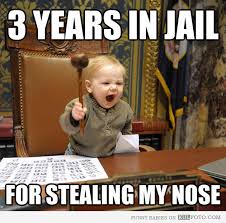
Baby Judge Stealing Nose


WE THE PEOPLE OF NEW JERSEY WOULD NOT ACCEPT

A JUDGE ACTING LIKE THIS CHILD

(pictured above)


SO:

WE CAN NOT ACCEPT THIS


OR


THIS FRAUDULENT COURT ORDER

(NO PUBLIC DEFENDER WAS EVER ASSIGNED IN 2013)


Judge TRUTH IS NO DEFENSE

UNLESS WE WANT COURTS WHERE THE TRUTH IS:

NO LONGER RELEVANT


THEN WE MUST DEMAND ENFORCEMENT OF THE LAW

VIA WRITS OF MANDAMUS LIKE THIS


TO BE CLEAR:


Wall of Shame 1

JUDGE PEDRO JIMENEZ: EXCEEDED ALL LAWFUL AUTHORITY WHEN HE INCARCERATED DEREK SYPHRETT – HE COMMITTED CRIMES IN DOING THE SAME

MERCER COUNTY SHERIFF JACK KEMLER: HAS BEEN COMPLICIT IN COVERING UP A FALSE ARREST AND FALSE IMPRISONMENT BY HIS STAFF

MERCER COUNTY PROSECUTOR: JOSEPH BOCCHINI IS AWARE OF THE CRIMES COMMITTED HERE AND DID NOTHING WHEN ASKED TO IN WRITTING

MERCER COUNTY PROSECUOR JOSEPH BOCCHINI FILED A MOTION TO DISMISS THE CASE AGAINST MR. SYPHRETT VIA FAX IN VIOLATION OF THE COURT RULES

MERCER COUNTY ASSIGNMENT JUDGE MARY C. JACOBSON: TRANSFERRED STATE V. SYPHRETT TO BURLINGTON WITHOUT PROVIDING ANY FACTUAL BASIS FOR DOING THE SAME, SHE HAS REFUSED TO EXPLAIN IT TO THE ATTORNEY FOR THE DEFENDANT EVER SINCE FOR OVER 10 MONTHS

BURLINGTON COUNTY SUPERIOR COURT JUDGE JEANNE COVERT: ACCEPTED A FAXED MOTION AND RULED ON IT IN VIOLATION OF THE COURT RULES AND WITHOUT THE MOTION BEING SERVED TO THE DEFENDANT AT ALL!

BURLINGTON COUNTY ASSIGNMENT JUDGE RONALD E. BOOKBINDER, PROHIBITED THE DEFENDANT’S ATTORNEY AND THE DEFENDANT FROM APPEARING AT COURT FOR THE DEFENDANT’S TRIALS SEE THE VOID AND UNLAWFUL COURT ORDERS HERE,  THIS IS EXTRINSIC FRAUD, IT IS ALSO A CRIME OF WITNESS TAMPERING

ACTING DIRECTOR OF THE COURTS JUDGE GLENN GRANT HAS BEEN MADE AWARE OF ALL OF THE ABOVE, AND HE HAS NOT INTERVENED TO INSURE PROPER ADMINISTRATION OF THE COURTS

THE ADVISORY COMMITTEE ON JUDICIAL CONDUCT (A.C.J.C.) HAS BEEN SENT DOCUMENTS CONFIRMING CRIMES WERE COMMITTED BY JUDGES AND VIOLATIONS OF THE LAW AND JUDICIAL CANONS OCCURRED, THEY HAVE NOT ACTUALLY INVESTIGATED AND INSTEAD COMMITTED MAIL FRAUD BY TELLING THE COMPLAINANT THAT THE INVESTIGATION AND MATERIALS HAD BEEN PUT BEFORE THE A.C.J.C. WHEN IN FACT A COMMITTEE MEMBER TOLD THE COMPLAINANT THAT HE HAD NEVER SEEN THE COMPLAINT (ASSOCIATE JUSTICE STERN, RETIRED)


MERCER COUNTY SHERIFF’S OFFICERS HAVE ARRESTED DEREK SYPHRETT TWICE WITHOUT PROBABLE CAUSE OR A WARRANT, AND THEN LATER DENIED THAT THEY DID.


MERCER COUNTY CORRECTIONS CENTER WARDEN CHARLES ELLIS: IS AWARE OF THE UNLAWFUL INCARCERATION BUT HAS DONE NOTHING TO PROTECT MR. SYPHRETT’S RIGHTS


WHILE NO COURT HAS ACTUALLY ENFORCED THE COURT ORDERS PROHIBITING MR. SYPHRETT FROM APPEARING IN COURT, THEY ALSO REFUSE TO ADMIT THE ORDERS ARE IN FACT VOID AB INITIO, BECAUSE THEY VIOLATE THE LAW ITSELF!


Gadsen Flag


TO BE MORE THAN CLEAR:


THERE IS NO SUCH THING AS LEGAL IMMUNITY FROM THE TRUTH

ON THE INTERNET OR VIA PUBLIC OPINION


THE ABOVE NAMED PARTIES ARE GUILTY OF TREASON

AND OTHER FELONIES


Our Sole Recourse will remain civil and lawful at all times, but

WE will not accept these injustices or allow them to be abided!


The End Writing

THE END FOR AN UNLAWFUL JUDGE – It Looks Like This!

Standard


LETTER TO ASSIGNMENT JUDGE RONALD E. BOOKBINDER

SENT AFTER HE ATTEMPTED TO PROHIBIT A DEFENDANT FROM:

APPEARING  IN COURT FOR HIS OWN TRIAL, VIA

UNLAWFUL COURT ORDERS


SEE THE FAXED LETTER AND FAX RECEIPTS TO ADVISORY COMMITTEE ON JUDICIAL CONDUCT (A.C.J.C.)

ADMINISRATIVE OFFICE OF THE COURTS (A.O.C.) AND THE SUPERIOR COURT HERE:

2014-10-10 – LTR to Bookbinder ACJC AOC Goodbye


10/10/2014

Derek C. Syphrett, Esq.

Pro se litigant (Defendant)

252 Fountayne Ln,

Lawrence Township, NJ 08648

VIA U.S. MAIL & FACSIMILE BY THIRD PARTY PERSONS

Family Division Clerk, Suasan Fortino, Judge Bookbinder, John Tomasello, John Call, Judge Covert, Sharyn Sherman, Law Clerks for the Judges named herein.

Superior Court of New Jersey, Chancery Division, Family Part (Burlington County)

49 Rancocas Rd

Mount Holly, NJ 08060

RE: Bischoff v. Syphrett

Docket No.: FV-03-1154-14 – DIQUALIFICATION OF TRIAL JUDGES


Dear Judge Bookbinder:

I am writing the court (not you) to further propound upon the court my demands for justice, pursuant my right to petition my government for redress of grievances, as secured by the People of New Jersey, pursuant the New Jersey State Constitution of 1947, and pursuant my right to communicate in the interests of Justice as an attorney-in-fact (citation: Hawkins v. Harris, 141 N.J. 207 (1995): see courts findings which provide legal foundation supporting my judicial litigation privileges)

I wanted to follow-up on the Status Conference of 10/7/2014, to address your offer to allow me to “Judge Shop” and choose to have the Judge of my choice hear my petitions for redress of grievances (my motions papers generally) with regard to FV-03-1154-14 (only).

Please be advised that I decline your request to participate in any form of “Judge Shopping”, because the offer and the concept itself is offensive and disrespectful to the courts, the litigants, the public trust, and the institution of the Superior Court itself.


deviljudge


SEE SOME OF THE UNLAWFUL, NULL & VOID COURT ORDERS HERE:

2014-02-06 and 2014-2-19 and 2014-3-10 COURT ORDERS BOOKBINDER


TO BE CLEAR:


My concern about either yourself or John Tomasello attempting to adjudicate my legal matters is borne from my desire to enforce litigant’s rights for the legal person(s) I represent (myself and all other legal persons that I, in fact, am). My concern is that both John Tomasello and yourself have ceased to be Neutral third parties in due to a multitude of actions each of you have voluntarily chosen to engage in, which are clearly contrary to the law, rules-of-law, the state constitution, the federal constitution, my civil rights, and the interests of justice generally. BOTH YOURSELF AND JOHN TOMASELLO ARE ALREADY DISQUALIFIED BY RULE FROM HEARING MY MATTERS PURSUANT THE JUDICIAL CANONS AND MANDATORILY BINDING COMMON-LAW OF THIS JURISDICTION (WHETHER IT BE JUDICIALLY NOTICED OR NOT).

I say the above because the facts, testimony, process, etc that is already before the court 100%, clearly and convincingly support my position that your offending court orders of: 2/6/2014, 2/19/2014, 4/1/2014, 9/12/2014, and others are in fact null and void.


Court Order Judge

AGAIN: I REQUEST YOU TAKE NOTICE OF THE COMMON-LAW IN TOTO, AND SPECIFICALLY INCLUSIVE OF THE DOCTRINE OF “THE LAW OF THE VOIDS”

    1. The common-law right to attack a court order that is null & void ab initio remains inviolate. As such I assert that the final order in FV-03-1154-14 is NULL & VOID ab inito. Further I assert the orders of Judge Bookbinder dated 2/6/2014, and 2/19/2014 are both Null & Void, and that they represent acts of extrinsic fraud, in that they purport to interfere with the appearance of a witness-of-fact (The Defendant). Such orders may be attacked at any time and are not time barred. They may be legally attacked directly at the trial court and/or collaterally in any court with jurisdiction over the matter.
    1. SEE THE FOLLOWING LEGAL ARGUMENTS AND LEGAL FOUNDATIONS SUPPORTING MY CHALLENGE TO THE FINAL COURT ORDER AS A CHALLENGE DIRECTED AT ANY AND ALL NULL & VOID COURT ORDERS AFFECTING MY LEGAL INTERESTS:
    1. The law is well-settled that a void order or judgment is void even before reversal. Take Judicial Notice of:
      1. Vallely v. Northern Fire & Marine Ins. Co.,254 U.S. 348, 41 S.Ct. 116 (1920)

      1. Excerpts from “The Valley Supreme Court:

Courts are constituted by authority and they cannot go beyond that power delegated to them. If they act beyond that authority, and certainly in contravention of it, their judgments and orders are regarded as nullities. They are not voidable, but simply void, and this even prior to reversal.”

      1. Boyd v. United 116 U.S. 616 : Justice Bradley said:

It is the duty of the courts to be watchful for the Constitutional Rights of the Citizens…”

      1. Gomillion v. Lightfoot 364 U.S. 155:

Constitutional Rights would be of little value if they could be indirectly denied.”


      1. Norton v. Shelby County 118 U.S. 425:

An unconstitutional act is not law; it confers no rights; it imposes no duties; affords no protection; it creates no office; it is in legal contemplation, as inoperative as though it had never been passed.”

      1. In Marbury v. Madison, Chief Justice John Marshall stated:

the very purpose of the written constitution is to ensure that the government officials, including Judges, do not depart from the documents fundamental principles”.


0001910cba29056841e3b2e8ca7f16074ab

CONCLUSION:


For some not fully transparent, but yet apparent reason: it appears that you and your colleagues have attempted to obstruct justice in an unlawful manner with regard to my legal affairs and my communications with the court and third parties.

THIS WAS A BAD IDEA (MEANING STUPID). I am not the sort of man who should be trifled with by people or persons who have financial assets or lifestyles they wish to maintain at the status quo. I say this not to threaten or scare you, but to emphasize my firm and appropriate position that I will endeavor in any and all civil and lawful manners to hold those who transgress my children, my property, or my rights fully accountable to the law, or at a minimal: I will always endeavor to ensure that those who violate my personal rights or those of my children will be forever discouraged from doing so EVER again, by standing up for my rights in a civil, lawful manner, pursuant the interests of Justice.

TO BE CLEAR: I am not an intolerable jerk, BUT I CAN BE IN THE INTEREST OF JUSTICE… I CAN BE AS BIG OF A JERK AS THE INTERESTS OF JUSTICE REQUIRE, AND I HAVE NO PROBLEM TAKING THAT POSITION IF/WHEN IT SERVES THE INTERESTS OF JUSTICE.

FURTHER:

The history of people who’ve doubted my legal skill, and/or my professional skill is a very sad story. They do not fair well generally, because ultimately my success leads to their downfall and scrutiny of their peers. I am a very thoughtful person, and so when I speak or interact with the court it is ALWAYS PURPOSEFUL AND DESIGNED TO CREATE JUDICIAL EFFICIENCY AND AN END RESULT THAT IS IN FACT AND LAW: JUST.

Please also take some solace in the fact that while you have offended me and my family in a very personal manner, my dispute with you is not “personal”. I don’t care about you, or your family, your thoughts, your dreams, your aspirations, your retirement, your occupation etc. It’s just not something I want to concern myself with.

In fact if it were not for your awful conduct as a Judge I believe I could enjoy pleasant conversation with you and a few cocktails at a local eatery. At times you can seem to be a fairly enjoyable personality. However, as a Judge in my matters, you are a distraction, intolerable, and you’ve violated the law. For these reasons alone – I can not abide you handling of my legal affairs a second longer (Please see my writ of coram Nobis for details of my concerns and my legal rights to banish you from this case).

FURTHER: IT HAS NEVER MADE SENSE FOR BOTH JOHN TOMASELLO AND FOR YOU TO CO-DEPENDENTLY SERVE AS TRIERS OF FACT IN FV-03-1154-14… IT OFFENDS ALL MANNER JUDICIAL INDPENDENCE TO HAVE TWO JUDGES ACTIVELY HEARING THE MATTER, WITHOUT BOTH BEING PRESENT TO HEAR PRESENTMENT OF FACTS, TESTIMONY, OR MOTION PAPERS!!!

LASTLY: MY OFFICIAL POSITION IS YOUR COURT ORDERS DO NOT EXIST:

Please be advised that Your Court Orders and those of John Tomasello in FV-03-1154-14, FM-03-790-14, FV-03-1162-14, LITERALLY DO NOT EXIST IN THE CORPUS JURIS (THE BODY OF LAW)

I officially provide you this letter as legal notice that the orders are null and void, the aforementioned court orders: confer no rights; it impose no duties; affords no protection; creates no office; they are in legal contemplation, as inoperative as though it had never been passed … THEY DO NOT EXIST TO ME. FURTHER I WILL NOT CONSENT TO FURTHER HEARINGS BEFORE YOU AS YOU ARE LAWFULLY DISQUALIFIED AS OF 2/6/2014, WHEN YOU ACTED SUA SPONTE AS AN ADVERSE PARTY TO THE DEFENDANT AND THE INTERESTS OF JUSTICE BY IMPEDEING THE LEGAL PROCESS UNNECESSARILY AND CONTRARY TO THE LAW AS CITED IN MY WRIT OF CORAM NOBIS.

SO WITH THAT I SAY, HAVE A NICE LIFE AND BEGONE. IF I SEE YOU AGAIN I WILL MOST ASSUREDLY ARREST YOU AND PROSECUTE AS IS MY RIGHT IN NEW JERSEY UNDER THE LAW AND COURT RULE 1:21 et seq.

Kind regards,

Derek Syphrett

Pro se Defendant

P.S. PLEASE DELIVER THE FOLLOWING DOCUMENTS VIA INTEROFFICE MAIL UPON THE UNIFIED COURTS RECEIPT OF THE THIS LETTER.

cc: Judge Glenn Grant

cc: Administraive Office of the Courts (Appropriate Person Overseeing the Compliance with the Federal Americans with Disabilities Act)

cc: Michelle Smith Clerk of the Court

cc: Chief Justice Rabner

cc: Justice Albin

cc: Plaintiff – Kathryn Bischoff (the woman who never refuted or replied to my pleadings that she lied to obtain a FRO, delivered via Court Clerk, pursuant DV Procedural Manual)


For more background on the UNLAWFUL ISSUES ENDURED BY THIS MAN IN NEW JERSEY SUPERIOR COURT (FAMILY COURT) READ MR. SYPHRETT WRIT OF CORAM NOBIS HERE.


Note a Writ of Coram Nobis is a ancient common-law writ that has origins in Chancery Courts. The New Jersey Family Court is still a Chancery Court, sitting within a Chancery Division of the Superior Court of New Jersey, as such it is totally appropriate to file a Writ of Coram Nobis as of a Common Law right to Demand the correction of court errors of fact. Further Pursuant Court Rule 4:50 it is our well-researched (non-legal opinion) that within 1-year of a FINAL JUDGEMENT,  a motion for NEW TRIAL may be appropriate if a litigants rights were violated through no fault of that litigant, and/or over that litigants objections to the same at trial.


SEE THE WRIT OF CORAM NOBIS HERE:

2014-10-07 – FV-03-1154-14 Derek Writ Coram Nobis

IT IS SCATHING AND HILARIOUSLY RUDE TO THE JUDGES WHO LIED!

(IT CONTAINS MANY GRAMMAR ERROS, AND WILL BE AMENDED)


PickPocket and Loose Women

…  AND  …


The End Loonie Toons

Judge John Tomasello – Ignores the law & Incarcerates a Man Unlawfully

Standard

AFTER APPEARING BEFORE JOHN TOMASELLO

& REVIEWING CASES THAT HE GOT WRONG

I CAN CONFIRM THAT HE IS A PUBLIC MENACE

Short List of Cases Tomasello has Botched:

1. Houseman v. Dare – Judge Tomasello was overturned after presiding over a dog custody case…

An unmarried man owned a dog and after he dumped his girlfriend she sued for custody

Rather than Dismissing this Case Tomasello presided over a case that ultimately cost the estranged couple over $40,000 in attorney fees… for a dog.

Judge Tomasello allowed Family Court Resources to be deployed for dog welfare rather than addressing the people and children that require the Family Court to resolve conflicts

2. Judge John Tomasello released a Man who solicted sex from a purported Minor Child – because it was a “victimless crime. The man was later convicted.  TOMASELLO WAS WRONG AGAIN… ATTEMPTING CHILD RAPE IS A CRIME IN NJ (SEE ARTICLE HERE)

– The County Prosecutor Took the Unusual Approach of Berating Judge Tomasello in the Local Paper

– You Know a Judge is horrible when the local members of the Bar actually say so publicly … its very unusual!

3. Judge John Tomasello Lied about court orders he issued, and presided over a case where the Defendant was ordered not to appear in court… Judge Tomasello failed to recognize that this was a denial of due-process read about that here.

Judge TRUTH IS NO DEFENSE

TODAY I PRESENT A FOURTH CASE THAT

JUDGE JOHN TOMASELLO BOTCHED SO BADLY

IT WAS OVERTURNED BY THE APPELLATE AND REMANDED TO A

DIFFERENT JUDGE

NOTABLY THE APPELLATE COURT ORDER

INCLUDES JUDGE TOMASELLO’S NAME

DESPITE THE COMMON-PRACTICE OF THE APPELLATE DIVISION

WHEREBY A JUDGE THAT IS OVERTURNED IS NEVER MENTIONED BY NAME

BASICALLY THE APPELLATE COURT WAS

CALLING OUT JUDGE TOMASELLO – BECAUSE THEY WERE OUTRAGED!

READ THE TEXT OF

APPELLATE DECISION

TOMASELLO DEMONSTRATED A FAILURE

TO UNDERSTAND THE LAW


Kangaroo Court Judge


N.J. Superior Court, Appellate Division

A-6101-02T4; Appellate Division; opinion by Fisher, J.A.D.; decided and approved for publication May 23, 2005. Before Judges Fall, Payne and C.S. Fisher. On appeal from the Law Division, Gloucester County, Indictment No. 02-12-0206. [Sat below: Judge Tomasello.] DDS No. 14-2-0297

I. Defendant was charged with first-degree maintaining or operating a controlled dangerous substance (CDS) production facility (marijuana in an amount greater than 10 plants), in violation of N.J.S.A. 2C:35-4; first-degree possession with intent to distribute CDS (marijuana in an amount greater than 50 plants), in violation of N.J.S.A. 2C:35-5(a)(1) and N.J.S.A. 2C:35-5(b)(10)(a); fourth-degree possession of CDS (marijuana in an amount greater than 50 grams), in violation of N.J.S.A. 2C:35-10(a)(3); and third-degree possession of CDS (methamphetamine), in violation of N.J.S.A. 2C:35-10(a)(1).

After the trial judge denied his motion to suppress, defendant entered a plea of guilty to first-degree maintaining or operating a CDS production facility. The trial judge imposed a sentence of 10 years’ imprisonment, one-third of which defendant must serve before becoming eligible for parole. Monetary assessments were also imposed. Pursuant to the plea agreement, the other counts of the indictment were dismissed.

Held: A warrantless thermal-imaging scan of defendant’s home and the warrantless seizure of utility records regarding the amount of electricity consumed in defendant’s home were illegal. As a result, the judgment of conviction is reversed, the denial of the motion to suppress vacated, and the matter is remanded for consideration, after a hearing, of whether defendant consented to the search of his home and, if so, whether the consent search was so impacted by the prior unlawful police conduct as to require the exclusion of the evidence then seized. Also, the trial judge erred by failing to allow testimony about a polygraph test administered to defendant. Lastly, a different judge is to be assigned to conduct all future proceedings in the trial court.

II. In January 2000, Detective William Peacock, lead investigator for the New Jersey State Police’s Marijuana Eradication Unit, obtained information by way of subpoena that defendant had received four packages of indeterminate size and content from a nearby business that sells plant-growth equipment. Why a subpoena was sought to obtain these records was not revealed at the suppression hearing.

Defendant’s mere receipt of this equipment ¿ the precise nature of which has not been revealed ¿ led Detective Peacock to somehow suspect that defendant might be growing marijuana in his home. As a result, Detective Peacock obtained a subpoena to compel a power company to turn over records concerning defendant’s residential use of electricity. The record, however, does not disclose what this information revealed.

On cross-examination, defense counsel sought to explore the content of these electrical records, as well as the manner in which they were obtained. He was permitted only a few questions before the trial judge ruled that this information had no bearing on whether defendant voluntarily consented to a search of his home. Defense counsel, in compliance with the trial judge’s directive, asked no further questions regarding the electrical-usage records.

As a result, the record reflects that when deciding to seek defendant’s consent to a search of his home, Detective Peacock knew only that defendant obtained equipment, only identified as plant-growth equipment, in January 2000; that no unusual amount of heat emanated from defendant’s home when a warrantless thermal scan was conducted in May 2000; and that subpoenaed utility records indicated that defendant’s home used electricity to some unknown extent at some unknown time. Detective Peacock conceded that this information would not support the issuance of a search warrant for defendant’s home, but he felt it appropriate to speak to defendant. Consequently, Detective Peacock determined to engage defendant in a “knock and talk.”

On July 27, 2000, Detective Peacock approached defendant’s residence, in the early morning, with four other law enforcement agents, all in plain clothes and all armed. They entered the curtilage of defendant’s home, without consent. In fact, two officers passed through a gate that had been closed to approach the back door, while the other three officers approached the front door.

Detective Peacock acknowledged that the manner in which the officers approached to engage in this “knock and talk” was compatible with how a search warrant would have been executed, the only difference being that the officers did not have a search warrant and would not have obtained a search warrant, from an impartial judge, if sought.

In addition, contrary to Detective Peacock’s testimony that he simply wanted to talk to defendant, the officer at the front door did not merely request that defendant speak with them but instead demanded that defendant speak to them, saying, “We need to speak to you?”

Detective Peacock testified that all five officers then entered defendant’s home through the front door and that he obtained defendant’s consent, as memorialized on a consent form that defendant executed. Once in the home, according to Detective Peacock, defendant readily divulged that there were 40 marijuana plants growing in the basement. The officers’ subsequent search led to the discovery of more than 100 growing marijuana plants in various parts of defendant’s home, as well as numerous plastic bags containing processed marijuana, and a plastic bag containing methamphetamine.

Defendant disputed Detective Peacock’s version, testifying at the suppression hearing that Detective DeBiase knocked on his front door, said he had a search warrant, and promptly entered the home through the front door with two other officers. The officers inside then let Detective Peacock and the fifth officer in through the back door. According to defendant, no one asked his permission to enter or search the home, but, instead, immediately on entering, an officer handcuffed defendant and told him to sit on a couch in the living room, along with his girlfriend, while the officers searched the home. Only approximately one hour later was defendant asked to sign a form (the aforementioned consent form) that he was not permitted to read. Defendant testified that, when presented to him, the consent form was folded in such a way as to preclude his ability to read its contents, an issue that was explored at the hearing, when it was revealed through the testimony of a retired state police officer that the consent form in question was outdated.

In addition, defendant called a polygrapher to testify. Prior to his being sworn, the trial judge sustained the state’s objection, thus precluding the polygrapher’s testimony regarding the results of his examination of defendant relating to the July 27, 2000, events. Defendant also offered the polygrapher’s testimony of prior consistent statements allegedly made by defendant, which the trial judge initially permitted; however, the trial judge soon thereafter sustained the state’s objection that such testimony was barred by N.J.R.E. 607, a ruling defendant has not challenged on appeal.

The trial judge found Detective Peacock’s version credible. He rejected defendant’s argument that the consent form was folded in a way that, when presented for his signature, barred his examination of its content; found insignificant that the consent form was outdated; found Detective Peacock credibly explained why so many officers were present when the ostensible intent of the visit was to simply “knock and talk”; found reasonable the fact that Detective Peacock passed through a gate, entered defendant’s backyard and approached the back door, because the detective believed that was the door more commonly used by the residents; found that defendant invited the officers into his home because it was raining; found that, on entering the home, Detective Peacock was able to detect the smell of unburnt marijuana; and found that defendant volunteered there were marijuana plants in the basement. From these facts, the trial judge concluded that defendant freely and voluntarily consented to the search of the home, and consequently denied defendant’s motion to suppress.

As observed, the trial judge precluded defense counsel’s inquiries into the legality of the warrantless search of electrical-usage records and did not determine whether such a search required a warrant. Although defendant attempted to assert that the prior searches were unlawful and tainted the consent allegedly given by defendant to a physical search of his home, the trial judge mistakenly failed to consider or decide those issues.

III. Contrary to the trial judge’s ruling, the sufficiency of defendant’s alleged consent to the search of his home may very well have been impacted by any prior illegal searches. Because, contrary to the trial judge’s approach, evidence obtained from a consent search of a home will be excluded if it results either directly or indirectly from illegal police conduct, it must be initially considered whether the officers conducted any prior unlawful searches.

A. Detective Peacock subpoenaed information that defendant purchased plant-growth equipment from a business located in Williamstown. The record does not reveal what this equipment consisted of or why its purchase piqued the detective’s interest, but there is no dispute that this equipment could be used to grow marijuana plants indoors. It is also conceded that it is lawful to purchase or possess such equipment and that it may be used to grow plants that may be lawfully grown. What prompted the police to compel the turnover of this information regarding defendant’s purchase of plant-growth equipment is unknown.

Defendant has not questioned on appeal the lawfulness of the seizure of that evidence.

B. Armed with information that defendant obtained plant-growth equipment, Detective Peacock then conducted, without a warrant, a thermal scan of defendant’s residence in May 2000.

On June 11, 2001, slightly more than one year later, the Supreme Court of the United States held that thermal scanning constitutes a “search” within the meaning of the Fourth Amendment and that such a search of a home may not be conducted in the absence of a warrant. Kyllo v. United States, 121 S.Ct. 2038 (2001). The unlawfulness of such a search, even if not previously announced, should have been understood by law enforcement officials in New Jersey. As Kyllo held, thermal scannings of residences represent “the search of the interior of homes ¿ the prototypical and hence most commonly litigated area of protected privacy.” Id. at 2043.

Kyllo‘s holding, even when defendant’s home was thermally scanned a year earlier, was predictable, because a warrantless thermal scan unreasonably intrudes into and tends to reveal, albeit in a very general way, what occurs within the interior of the home ¿ the “chief evil” the federal and state constitutions were designed to combat. State v. Cassidy, 179 N.J. 150, 159-60 (2004). While such a scan, in and of itself, may reveal nothing more than the greater emanations of heat from particular areas of a structure, the Fourth Amendment’s shield from unreasonable governmental intrusions into the home is not restricted to only those things some would describe as “intimate.”

The Court’s holding in Kyllo, despite the division within the Court itself, was predictable and should not only be applied prospectively.

Although prior to Kyllo a majority of courts had determined that a thermal scan of a structure from a public thoroughfare did not constitute a search, a substantial minority had held to the contrary. Regardless of this imbalance, courts have interpreted the scope of rights granted by Article I, paragraph 7 of the New Jersey Constitution more broadly than courts have interpreted the Fourth Amendment, as more fully discussed later in this opinion.

C. The thermal scan in May 2000 suggested that no unusual or uncommon amount of “waste heat” was escaping from defendant’s home, and, according to the record, Detective Peacock only knew that defendant had purchased lawful plant-growth equipment in January 2000. With this limited and innocuous information, Detective Peacock obtained a subpoena to compel the power company’s records relating to the usage of electricity in defendant’s home as well as other similarly sized homes for comparison purposes. The state acknowledges that the police did not have probable cause to obtain a warrant for the production of these records, but nevertheless argues that such records are fair game and may be searched and seized regardless of the absence of a warrant based on probable cause because citizens have no legitimate expectation of privacy in such records.

Article I, paragraph 7 protects individuals from warrantless searches of a utility’s records regarding the usage of electricity in an individual’s home. The wording of Article I, paragraph 7 is “taken almost verbatim from the Fourth Amendment.” State v. Johnson, 68 N.J. 349, 353 n.2 (1975). Notwithstanding, our courts have recognized that in many instances Article I, paragraph 7 provides greater rights to an accused than the Supreme Court of the United States has found in the Fourth Amendment.

State v. Johnson marks the first step in New Jersey search-and-seizure jurisprudence beyond the basic rights guaranteed by the Fourth Amendment. Ibid. (“[U]ntil now [Article I, paragraph 7] has not been held to impose higher or different standards than those called for by the Fourth Amendment.”) Two years earlier, Schneckloth v. Bustamonte, 93 S.Ct. 2041 (1973), held that knowledge of the right to refuse consent to a search is only one factor in determining the voluntariness of consent. State v. Johnson specifically rejected that approach in interpreting Article I, paragraph 7 and held that, in such circumstances, the state has the burden of proving by clear and positive evidence that consent was voluntarily given, including proof that the accused had knowledge of the right to refuse consent. 68 N.J. at 353-54. Since the Supreme Court’s 1975 departure from Schneckloth, the scope of Article I, paragraph 7 has been found to expand beyond the parameters of the Fourth Amendment in many instances.

Guided by these frequent departures from what State v. Hempele, 120 N.J. 182, 197 (1990), referred to as the Fourth Amendment’s “floor of constitutional protection” ¿ in guaranteeing, through the application of the state constitution, the full realization of our liberties ¿ as a matter of first impression, there is a legitimate expectation of privacy in electrical-usage records maintained by a power company.

Four other courts have specifically decided the issue, three of which have held there is no legitimate expectation of privacy in such records. See Samson v. State, 919 P.2d 171 (Alaska Ct. App. 1996); People v. Dunkin, 888 P.2d 305 (Colo. Ct. App. 1994), cert. denied, sub nom., Smith v. Colorado, 115 S.Ct. 2251 (1995); State v. Kluss, 867 P.2d 247 (Idaho Ct. App. 1993). The decisions of these three courts were based on either the Fourth Amendment or their own state constitutions, and were generated by an approach inconsistent with the scope of Article I, paragraph 7.

Instead, the court aligns its decision with In re Maxfield, 945 P.2d 196 (Wash. 1997), the only case that has found a reasonable expectation of privacy in such records, because Washington’s search and seizure jurisprudence is far more akin to our own.

1. The fact that the records in question were created or are in the possession of some third person, and not the accused, is not the sine qua non for determining the scope of Article I, paragraph 7, as suggested by the state. The state’s position is grounded on United States v. Miller, 96 S.Ct. 1619, 1624 (1976), which held that the Fourth Amendment “does not prohibit the obtaining of information revealed to a third party and conveyed by him to government authorities, even if the information is revealed on the assumption that it will be used only for a limited purpose and the confidence placed in the third party will not be betrayed.”

Miller‘s linking of the legitimate expectation of privacy with third person access to information has not been followed in staking out the boundaries of Article I, paragraph 7. For example, State v. Hunt, 91 N.J. 338, 347 (1982), found no great significance in the fact that the telephone company and some of its employees were aware of the telephone numbers dialed by an individual. Instead, the Court held that the availability of access by others is not alone determinative of a legitimate expectation of privacy. Similarly, State v. Hempele held that garbage “does not lose constitutional protection merely because it is handed over to a collector.” 120 N.J. at 209. State v. McAllister, 366 N.J. Super. 251, 264 (App. Div.), certif. granted, 180 N.J. 151 (2004), found a legitimate expectation of privacy in a bank’s records concerning an accused’s account even though the bank’s employees had access to those records. In each of these examples courts departed from the lesser scope of privacy interests recognized in the Fourth Amendment analysis contained in Miller.

2. The usage of electricity tends to reveal what occurs within the home. Indeed, much of what has been said about the illegitimacy of a warrantless thermal scan (designed to determine whether certain areas of a structure were relatively hot when compared to the rest of the home or neighboring homes) is applicable to the finding of a legitimate expectation of privacy in information maintained by a power company as to the usage of electricity.

Instead of finding that any information about what occurs within the home is subject to protection, the Idaho court in Kluss, quoted with approval by the Colorado court in Dunkin, held that there is no legitimate expectation of privacy in electrical-usage records because those courts believed that such records do not identify any intimate activities of the accused.

This assertion that “waste heat” does not provide intimate details of what occurs within an accused’s home does not comport with Kyllo‘s interpretation of the Fourth Amendment or New Jersey’s own search-and-seizure jurisprudence.

3. This conclusion as to the reasonable expectation of privacy in electrical-usage records is not contrary to what has been held, at least inferentially, in State v. Jones, 179 N.J. 377 (2004), and State v. Sullivan, 169 N.J. 204 (2001). Those decisions dealt with the level of reliability in an informant’s tip of criminal activity. State v. Sullivan determined that a particular tip was reliable as to the name and location of an alleged drug dealer because, among other things, the informant’s tip was corroborated by utility records that identified the owner of the premises in question.

In State v. Jones, 358 N.J. Super. 420, 428 (App. Div. 2003), the Appellate Division alluded to this fact in distinguishing Sullivan, and when the Supreme Court reversed the Appellate Division’s judgment in Jones, it also referred extensively to the circumstances in Sullivan and the fact that the officer in Sullivan had corroborated the informant’s tip by “review[ing] utility records to confirm that the telephone number provided by the informant matched the telephone number of the apartment in the multi-unit building where the controlled buys were purportedly made.” 179 N.J. at 391. Nowhere in any of those opinions may it be ascertained by what authority the police officer was permitted to examine the utility records. Moreover, there is a distinct difference between a warrantless review of utility records to ascertain the name of an occupant of property, on the one hand, and a review of records relating to the usage of power, on the other.

4. There is a legitimate expectation of privacy in electrical-usage records maintained by a power company that precludes the intrusion of law enforcement in the absence of a warrant. Ultimately, there is no philosophical distinction to be drawn between the purpose behind excluding evidence obtained from a warrantless thermal scan of a residence and excluding evidence derived from a warrantless search of a utility’s records as to electrical usage in an accused’s home.

Such a determination may, at times, be affected by policy reasons. For example, in Hunt, the Court noted that “New Jersey has had an established policy of providing the utmost protection for telephonic communications,” and referred to the Legislature’s criminalization of wiretapping as early as 1930 in a statute since superseded by the Wiretapping and Electronic Surveillance Control Act, N.J.S.A. 2A:156A-1 to -34. See 91 N.J. at 345. Neither party has provided any guidance as to the legislatively recognized existence, or lack of existence, of an expectation of privacy in electrical-usage records. Indeed, the Open Public Records Act, N.J.S.A. 47:1A-1 to -13, merely begs the question by stating that “a public agency [such as a public utility] has a responsibility and an obligation to safeguard from public access a citizen’s personal information with which it has been entrusted when disclosure thereof would violate the citizen’s reasonable expectation of privacy.” N.J.S.A. 47:1A-1.

For the reasons indicated, a search warrant is required for utility records that reveal the amount of electricity used in an individual’s home. Because Detective Peacock obtained such records by way of a subpoena, and not by way of a warrant issued by an impartial judge, this search was unlawful.

IV. Having determined that the police had previously engaged in unlawful searches during their investigation of defendant, the Court remands for further proceedings regarding defendant’s motion to suppress in order that there may be consideration of the impact of these prior constitutional violations on the state’s contentions that defendant consented to the search of his home on July 27, 2000, and that the results of that search are admissible.

As is apparent, the proceedings on remand must not be limited solely to a determination as to the taint of the prior unlawful searches on the consent that the trial judge found was given. Instead, it must again be considered whether consent was given ¿ and given voluntarily ¿ because at the prior hearing the trial judge did not permit the full (or any) use of the prior unlawful searches nor did he consider how that unlawful conduct called into question the credibility of the state’s version of the July 27, 2000, events.

On remand, the judge should consider but not necessarily be limited to weighing the impact of the prior unlawful police conduct (1) on the credibility of the police version of the alleged consent search, (2) on the legitimacy of the manner in which the police sought consent, and (3) on whether the police had a reasonable suspicion that would justify seeking defendant’s consent to a search of his home. In addition, even if it is found after such an examination that defendant freely and voluntarily consented to the search of his home, the judge must also consider whether that consent was tainted by the prior unlawful conduct.

In weighing the circumstances eventually revealed at the future suppression hearing, the judge must first determine how the prior unlawful conduct impacts on the credibility of the police version of what occurred on July 27, 2000. In determining whether consent was requested or given, the judge should weigh whether the prior unlawful conduct might suggest that consent was not lawfully obtained. The judge is entitled to doubt the likelihood that the officers acted in a constitutionally permissible manner on July 27, 2000, when they did not so act on prior occasions. And while a strict application of N.J.R.E. 404(b) (stating that evidence of prior wrongs, although admissible for other purposes, “is not admissible to prove the disposition of a person in order to show that he acted in conformity therewith”) might suggest the preclusion of the officers’ prior wrongful acts, it is well-established that the rules of evidence do not apply at suppression hearings. N.J.R.E. 104(a).

Therefore, evidence of prior unlawful searches is relevant not only to a consideration of whether the search of defendant’s home constitutes the “fruit of the poisonous tree,” as more fully discussed later in this opinion, but also in analyzing whether the unlawfulness of the search in question is suggested by the unlawfulness of prior searches.

Second, the trial judge mistakenly rejected the significance of the fact that the officers, by passing through a gate and entering defendant’s backyard, had entered the curtilage of defendant’s home without consent, without a warrant and without probable cause. Although the federal and state constitutional prohibitions on unreasonable searches and seizures do not “bar all police observation” and have “never been extended to require law enforcement officers to shield their eyes when passing by a home,” and, for example, have not been found to bar a warrantless aerial observation of a fenced-in backyard, California v. Ciraolo, 106 S.Ct. 1809, 1812 (1986), there are limits to the extent to which the police may make a warrantless entry into the curtilage of an individual’s home. On remand, the judge may consider whether the warrantless intrusion by Detective Peacock and another officer into the gated backyard of defendant’s property transgressed defendant’s expectation of privacy and how, if unlawful, it may impact on the credibility of the state’s contention that the police acted lawfully when seeking defendant’s consent to a search of his home. By the same token, the judge should permit and consider any other evidence the state may seek to offer to justify the manner in which they approached defendant’s home.

Third, the judge should consider whether the police had sufficient information from which to seek defendant’s consent to the search of his home. To seek consent for such a search, the officers’ existing, lawfully obtained information must have been sufficient to generate a reasonable and articulable suspicion that criminal activity was occurring within.

Lastly, even if the judge determines on remand that defendant freely and voluntarily gave his consent to a search of his home, and even if the judge determines on remand that the police had a reasonable and articulable suspicion to seek defendant’s consent to that search notwithstanding the exclusion of the unlawfully obtained evidence, the judge must determine whether that consent search was tainted by the prior unlawful police conduct. The trial judge viewed the law enforcement activities that preceded the alleged consent search to be irrelevant. This was a mistake.

Whether a consent search cleanses the taint of prior illegal searches and seizures is not always clear. However, there is no doubt that a mere finding that the subsequent consent was free and voluntary is not alone sufficient to avoid the impact of the “fruit of the poisonous tree” doctrine. If we were to accept the trial judge’s view that defendant’s purported consent rendered irrelevant the prior unlawful police conduct, we would undermine the purposes of that doctrine. Such a holding would have a tendency to allow the police to conduct illegal searches and seizures with impunity, knowing that consent might later be readily forthcoming when the accused is confronted by police, armed with knowledge illegally obtained, and thereby absolve the police of the impact of their prior unlawful conduct. Such an approach, if adopted, would eviscerate the exclusionary rule’s deterrent effect.

V. In his supplemental brief, defendant argues that the trial judge erred by barring testimony about the results of a polygraph examination performed on defendant, including, supposedly, the expert’s opinion that defendant’s contention that he did not consent to the search was truthful.

The trial judge summarily refused to permit this testimony because he considered it irrelevant, and ultimately inadmissible. The judge also ruled that this testimony encroached on the ultimate issue to be decided, and that it constituted a waste of time. These four reasons given by the trial judge were insufficient to justify the exclusion of this testimony.

A. The judge was required, in part, to determine whether defendant consented to the search of his home, which turned on the “swearing contest” between Detective Peacock and defendant about what actually occurred on July 27, 2000. Since the polygraph testimony related, no matter how imperfectly, to the truthfulness of defendant’s version, it comported with N.J.R.E. 401’s broad standard of what is relevant.

B. The trial judge also summarily excluded the polygraph testimony because he believed it was inadmissible. This was also erroneous. State v. McDavitt, 62 N.J. 36, 46 (1972), held that polygraph testing had developed to such a point of reliability that the results could be admitted into evidence in a criminal matter if both the state and defendant so stipulated.

Polygraph testing is designed to demonstrate that the person tested was or was not truthful in answering certain questions based on measured changes in blood pressure, pulse, thoracic and abdominal respiration, and galvanic skin response. The polygraph as a device for detecting truthfulness is based on the assumption that changes in these physical conditions indicate an increase in stress consistent with deception. In a nonjury setting the admission of this type of evidence, when a proper foundation has been laid, is not limited by McDavitt‘s stipulation requirement.

In weighing the admissibility of such evidence in the present circumstances, the judicial system recognizes that cases are already adjudicated through the use of “lie detectors.” If the court was to allow a fact finder to detect whether a witness is lying or telling the truth based on observations of demeanor ¿ thus permitting the fact finder to consider among many other things whether, while testifying, the witness breathed heavily, perspired, spoke haltingly, avoided eye contact, gestured excessively, or gave off the unpleasant “odor of mendacity” (Williams, “Cat On A Hot Tin Roof,” Act III (1955)), then it should follow that measurable physiological occurrences during the answering of questions, such as changes in pulse rate, blood pressure, respiration or perspiration, may be probative of a witness’s credibility.

Here, while the parties did not enter into such a stipulation, the circumstances are distinguishable from McDavitt, chiefly because McDavitt considered the use of polygraph evidence at a trial, before a jury, to determine defendant’s guilt. Thus, in weighing the applicability of this stipulation


STATE OF NEW JERSEY COURTS – IGNORE SUPREME COURT RULINGS – UNLAWFULLY INTERFERE IN PARENTING TIME

Standard

Crony King


BELOW IS SOME INFORMATION SUBMITTED TO THE WEBSITE BY A PERSON IN NEW JERSEY THAT COMPILED RESEARCH FOR THEIR OWN MOTION TO THE COURT.

ITS A FASCINATING SUMMARY OF SUPREME COURT DECISIONS THAT PROHIBIT NEW JERSEY COURTS FROM INTERFERING IN PARENTING TIME DECISIONS OF “FIT PARENTS”.


IT HAS BEEN SUGGESTED TO  THIS WEBSITE THAT:

1) Any Court that issues orders inviolate of these Supreme Court Decisions is violating parents Constitutionally Protected “Due Process Rights” and orders issued contrary to these decisions are legally null and void.

2) In practice I suspect the New Jersey Courts and the Bar Association will Continue to Ignore these U.S. Supreme Court Decisions because these decisions get in the way of bilking innocent families out of hundreds of thousands of dollars individually and billions of dollars collectively


U.S. SUPREME COURT DECISIONS

PROHIBITING “THE STATE” FROM

INTERFERING IN PARENTAL DECISIONS


Court Order Judge

THE FOLLOWING TEXT IS CIRCULATING AMONG FAMILY RIGHTS ADVOCATES TODAY

WE HAVE REPUBLISHED IT HERE TO INCREASE THE DISTRIBUTION OF THIS FREE INFORMATION:


THE FOLLOWING CITATIONS COME ALSO FROM: HERE


    1. In Parham v. J.R. et al 442 U.S. 584 (1979) in toto, inclusive of cited cases, and specifically with regard to its findings that:

      • The Supreme Court declared the ‘best interest of the child’ resides in the fit parent – not in the state: “Our constitutional system long ago rejected any notion that a child is a “the mere creature of the State” and, on the contrary, asserted that parents generally “have the right, coupled with the high duty, to recognize and prepare [their children] for additional obligations.”
    2. Santosky v. Kramer 455 U.S. 745 (1982) in toto and specifically with regard to its legal findings that:

      • To deny a parental right requires constitutional due process that proves he’s either unfit or a clear danger to his children – proven with ‘clear and convincing’ evidence. As such, Santosky v. Kramer 455 U.S. 745 (1982) emphasized to restrict a fundamental right of a parent to any extent, requires a showing of clear and convincing evidence that serious harm will come to the child.
    3. Meyer v. Nebraska, 262 U.S. 390, 399, 401 (1923) in toto and with regard to the legal fact that the Supreme Court established the following:

      • ‘liberty’ protected by the Due Process Clause includes the right of parents to “establish a home and bring up children” and “to control the education of their own.”
    1. Washington v.Glucksberg, 521 U.S. 702, 719 (1997) in toto, including citations, and with regard to:

      • The right to Due Process includes a substantive component to the process that “provides heightened protection against government interference with certain fundamental rights and liberty interests.” Id., at 720; see also Reno v. Flores, 507 U.S. 292, 301302 (1993).


… IF THE CITIZENS CAN NOT GET THE COURT TO ABIDE THE ABOVE LAWS, THEN:

WE SHOULD PREPARE TO DO THE FOLLOWING:

Serfs hoe

Note: We think it is worth filing / citing these cases with our motions now that we have reviewed them.  Why Not?  Can’t make things any worse with regard to our cases. What readers of this cite do with this information is an individual decisions, which we withhold any advisement concerning. This website is does not provide this information as legal advise nor do we have any certified legal expertise express/implied or otherwise.

JUDGES LYING TO JUDGES … OH MY!!! – In Letter Form

Standard

deviljudge

WHAT HAPPENS WHEN ONE JUDGE LIES TO ANOTHER JUDGE

BELOW I SUBMIT THE ANSWER

&

THE UGLY TRUTH

(Spoiler Alert: Judicial Conduct Committee and Self Regulation of the Courts is a Fraud)


Court Order Judge

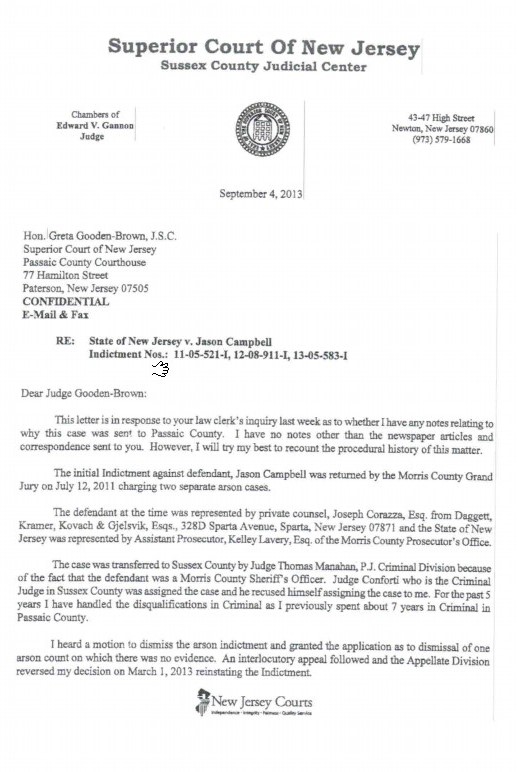
NOTES ABOUT JUDGE GANNON’S LETTER & HIS DISGUST:

  • His Letter Recounts a Scandalous Experience “Expletives Deleted” he says!
  • The Original Letter was likely drenched in tears and includes quotes from Shakespeare and Macbeth (Morbid)
  • The Letter would be hilarious if only it was fiction!
  • At the bottom of this Article (Click Here) is Included a “Sloppy” Legal Brief from a litigant who had a similar experience in another County


LETTER FROM JUDGE GANON EXPRESSING:

His disgust with the New Jersey Judiciary

&

Its Lying Ways:


Judge Gannon p1 2013-09-03 Judge Gannon p2 2013-09-03 Judge Gannon p3 2013-09-03


… WHY SHOULD WE TRUST THESE JUDGES AGAIN ???

 Fingers Crossed Oath

OH YEAH BECASE THEY SWORE AN OATH….

… AND THEYTOLD US TO TRUST THEM


WAIT …. THERE IS MORE:


BURLINGTON COUNTY & MERCER COUNTY JUDGES

PLAY SAME DIRTY GAME


Scales Flaiming

TRANSFER ORDERS WITHOUT ANY LEGAL JUSTIFICATION PROVIDED:

ASSIGNMENT JUDGE C. JACOBSON (MERCER COUNTY) TRANSFERRED THE CASES WITH THESE VAGUE COURT ORDERS (NO FACT FINDING NO RECUSALS)


  1. 2013-11-22 – ORDER – CASE 13-2502 – Jacobson – Jimenez Recusal

  2. 2014-01-17 ORDER TRANSFER CIVIL DOCKETS


THE DEFENDANT FILED A BRIEF TO OBJECT TO THE TRANSFER ORDERS SEE THAT “SLOPPY” LEGAL BRIEF BELOW


SEE THE BRIEF HERE:

SEPTEMBER 2014 LEGAL BRIEF:

CITING PATTERN OF MISCONDUCT SIMILAR TO WHAT JUDGE GANNON EXPERIENCED … BUT WORSE!

READ THE BRIEF – SCATHING / OTHER ISSUES RAISED

NOTES

  • Assignment Judge Mary Jacobson, Presiding Judge Catherine Fitzpatrick, Judge Marbrey decided to Transfer Cases without recusing any of the Judges AFTER TRIALS HAD BEGUN… THE COURT ORDER DOES NOT EXPLAIN WHY. THESE CASES WERE TRANSFERRED
  1. FV-11-00887-13 (Bischoff v. Syphrett);
  2. FV-11-00625-13 (Wallace v. Syphrett);
  3. FM-11-00097-11 (Wallace v. Syphrett);
  4. Prosecutor Case #03-2502-13 (State v. Syphrett)
  • After this Pro Se litigant went through hell in Mercer County the Judges became afraid of being accountable for misconduct and


…. SO THE JUDGES IN NJ CONTINUE TO BREAK THE LAW ….


Justice Gagged

AN ANONYMOUS JUDICIAL CONDUCT COMPLAINT WAS FILED

ON BEHALF OF JUDGE GANNON

AND DEREK SYPHRETT ON 9/17/2014

SEE A.C.J.C. COMPLAINT FAX COVERSHEET HERE:

LETTER: ACJC COMPLAINT 9/17/2014 F’OR:

ASSIGNMENT JUDGE THOMAS WEISENBECK &  ASSIGNMENT JUDGE MARY C. JACOBSON


LET’S SEE IF THE A.C.J.C. INVESTIGATES

THIS UNLAWFUL CONDUCT


IF THEY DO NOT INVESTIGATE,

… THEN PREPARE YOURSELF FOR THE CONSEQUENCES

BY DOING THE FOLLOWING:

Serfs hoe

BECAUSE IT WILL MEAN YOU HAVE NO RIGHTS IN NJ COURTS!

Just Like This Guy Found Out When Court Officers Kidnapped Him to Shut Him Up (Click Here For That Story)

COURT REFUSES TO ALLOW ME TO SPEAK WITH OMBUDSMAN

Standard

Justice GaggedArticle Published after Receipt from Derek Syphrett:

BACKGROUND INFORMATION:

AFTER MOTIONS I FILED WENT MISSING IN A DV CASE I WAS FOUND GUILTY, THE COURT HAS CONTINUED TO RETALIATE AGAINST MY EFFORTS TO SEEK JUSTICE.

PRIOR TO THE DV TRIAL I HAD REQUESTED TO SEE MY FULL FILE AS I SUSPECTED THE PRIOR RECUSED JUDGES WOULD ATTEMPT TO REMOVE MOTIONS FROM THE FILE TO RETALIATE…. IT APPEARS THIS HAPPENED.

  • 6/7/2013 Motion Stamped Received and discussed on the Record 6/13/2013 was removed from the file before the continued 2/19/2014 trial of the DV (after recusal of prior Trial Judge – MISSING FROM CASE FILE FV-11-887-13 (Kathryn Bischoff v. Derek Syphrett)
  • 12/11/2013 Motion filed for dismissal of DV claim due to recusal of trial judge who issued the TRO. (Kathryn Bischoff v. Derek Syphrett). THIS MOTION WAS DELIVERED TO THE COURT IN TRIPLICATE ON 2 SEPARATE DATES – ITS MISSING
  • 1/12/2013 to 2/4/2013 I sent letters to the court requesting to review my case file prior to the scheduled TRIAL in FV-11887-13, RE-DOCKETED IN BURLINGTON COUNTY AS FV-03-1154-14.
  • 2/6/2014 I WAS PUNISHED FOR REQUESTING TO VIEW MY FILE PRE-TRIAL:

Judge Bookbinder issued an unlawful court order: prohibiting me from appearing in court pre-trial or at trial for any reason without EXPRESS PERMISSION FROM A SUPERIOR COURT JUDGE. This was unlawful because it violates my constitutionally protected rights to due process under the 1st Amendment & 14th Amendment of the Constitution for the United States of America (1787 Original Jurisdiction)and the New Jersey Constitution which establish the inalienable right to access the court and to be tried consistent with due-process under the law.

  • ADDITIONALLY I FILED A “IMMEDIATE APPEAL” with regard to the DV charge. This is a rarely used statutory right if you are accused of Domestic Violence in New Jersey – see Statute N.J.S.A.: 2C:25-28i.

An immediate appeal is meant to allow the Defendant to challenge a TRO issuance since the TRO was issued without the Defendant present in court to defend himself/herself.

THE COURT IS REQUIRED TO SEND LEGAL NOTICE AFTER SCHEDULING AN IMMEDIATE APPEAL ACCORDING TO THE DOMESTIC VIOLENCE PROCEDURE MANUAL (link to PDF). IN MY CASE THE COURT NEVER SCHEDULED THE IMMEDIATE APPEAL AND JUDGE PETER WARSHAW ERRONEOUSLY DENIED MY IMMEDIATE APPEAL BECAUSE HE SAID I SHOULD HAVE NOTIFIED THE PLAINTIFF AFTER I SERVED THE PLAINTIFF THE IMMEDIATE APPEAL.

I WAS DENIED STATUTORY DUE PROCESS BECAUSE THE COURT NEVER SCHEDULED THE IMMEDIATE APPEAL.

  • RETALIATION CONTINUED WHEN JUDGE JOHN TOMASELLO THREW ME OUT OF COURT AT TRIAL IN BURLINGTON FOR MAKING MY 1ST AND ONLY OBJECTION IN A DIFFERENT CASE… YET HE IS SET TO BE THE TRIAL JUDGE IN THE POST-TRIAL HEARING DESPITE THE FACT HIS BIAS AGAINST ME IS CLEAR AND CONVINCING!

0001910cba29056841e3b2e8ca7f16074ab

NEW POST TRIAL FILINGS FOR RELIEF

LOOK AT HOW RIDICULOUS THIS HAS BECOME:

THIS WEEK: I have filed post trial motions to confront the corrupted court process.

Here are the recent letters to AND from the court:’

Letters and Letter Briefs set to the court to protest the court’s failure to schedule my immediate appeal:

2014-08-07 TO 14 – LTRS – Biased Court


LETTER FROM JUDGE BOOKBINDER

2014-08-14 LTR From Judge Bookbinder

LOOK AT ALL THE PEOPLE COPIED TO THIS LETTER !!!

– New Jersey Clerk of the Courts;

– Acting Director of the Courts;

– Chief of Staff for the Courts, etc

IMAGE OF JUDGE BOOKBINDER’S LETTER

2014-08-14 - LTR BOOKBINDER p1

2014-08-14 - LTR BOOKBINDER p2

COURT: REMOVED / LOST MY FILED MOTIONS BEFORE I WAS FOUND GUILTY OF DV

Standard

Evil Devil Lawyer

MYSTERIOUSLY MISSING FILES IN MY CASE

RESULTED IN GUILTY FINDING

The links in this article show my efforts pre-trial to view my DV file before a trial on the Matter.

In response to my 2/4/2014 letter requesting to see my file (because I suspected retaliation from the recused judge), the new assignment Judge – Judge Bookbinder – actually punished me for asking to see my file.

Later it was revealed that 2 motions were missing from the file including pre-trial pleadings that proved the Plaintiff Kathryn Bischoff (resident of Robbinsville / teacher in Hightstown) filed a false complaint against me.

JUDGE WHO ISSUED TRO VIOLATED COURT RULES – SHOULD HAVE RECUSED HIMSELF

The motion papers also called for the vacation of the DV TRO because the Judge who issued it. Judge R.Douglas Hoffman was actually involved in a legal dispute with me at the time he issued the TRO. In otherwords he had a conflict of interest that wasn’t waivable by himself or myself, and according to court rule 1:12-1(g) he was required to recuse himself prior to hearing the application for the TRO – HE DIDN’T.

MY MOTION FOR JUDGE HOFFMAN’S RECUSAL WENT “MISSING” SEE IT HERE:

2013-06-07 – FV-11-887-13 Reconsideration Motion


In July of 2013 I had Judge Hoffman recuse himself from my legal affairs based on the same paperwork I filed in response to Kathryn Bischoff’s TRO application, I submitted that recusal order to the court in a letter and later in a 11/26/2013 motion.

The 11/26/2013 motion was removed from the case file after being timely filed with the court pre-trial.

Additionally a 6/7/2013 motion was removed from the file despite my timely filing of those pleadings which were converted into motions in limine (in trial motions).


  • SEE THE COURT ORDER PUNISHING ME FOR WRITING THE COURT TO VIEW MY FILE HERE:

Court Order Bookbinder - Unlawful pg1Court Order - Bookbinder Unlawful pg2


  • LETTER DEMANDING MY CASE BE TRANSFERRED TO JUDGES WHO WON’T PUNISH ME FOR REQUESTING TO SEE MY FILE AND WHO WILL ENSURE MY MOTIONS WILL BE HEARD FAIRLY IN THE FUTURE:

SHAME ON YOU

Naming Names:

Trial Judge in Mercer County Superior Court:  Judge Janetta Marbrey (responsible for file).


Trial Judge in Burlington County Superior Court: Judge John Tomasello

Assignment Judge who refused to allow me to see my file pre-trial: Judge Ronald Bookbinder

Judge Catherine Fitzpatrick & Alleged Cronyism

Standard

 Crony King

==================================================================

HERE IS A SHORT STORY OF APPARENT CRONYISM IN THE COURTS:

==================================================================

JUDGE FITZPATRICK’S OLD BOSS TOOK A JOB WITH HER HUSBANDS FIRM RIGHT AFTER SHE WAS PROMOTED TO PRESIDING JUDGE OF THE FAMILY PART.

A lot of Lawyers here in Mercer county have commented that my divorce Judge Judge Catherine Fitzpatrick became a presiding judge of the Family part incredibly quickly.

One lawyer John Hartmann revealed that she got the job because her husband was a high profile attorney for Stark & Stark. (John Hartmann is Judge Fitzpatrick’s cousin-in law.. Husbands Cousin).

Well for me the story was too compelling not to investigate – it ended with some tragic discoveries:

Story of the Presumed Judge Quid Pro Quo that bought Fitzpatrick’s Job:

1. Judge Fitzpatrick became a Judge in 2009 she became presiding judge of the Family Part in March 2010 (wow fast right).

2. Her husband is John Sakson of Stark & Stark.

3. Judge Smithison Retired (Former Presiding Judge of the Family Part) about March 2010 and took a Job at Stark & Stark (working for Judge Fitzpatrick’s Husband).

Note:

(a)Judge Smithison allowed his wife to sit on a jury as an alternate juror – the ACJC took no action but sent a letter telling him he shouldn’t do that! A wrist slap for misconduct was appropriate for the A.C.J.C. judicial disciplinary committee, because their job is primarily to cover up judicial misconduct rather than investigate it.

(b) Judge Smithison decided the Megan’s Law Case (he’s got juice).

4. Judge Fitzpatrick worked under Judge Andrew Smithison who was the presiding judge of the FP in 2009

5. THE SHOCKER: My wife’s attorney Jennifer Millner worked as a law clerk in the 80s for none other than Judge Smithison

Note Judge Fitzpatrick & Jennifer Millner also serve on a committee of the Mercer County Bar Association (Bench-Bar Committee). They actually discussed agenda items during my hearings and stated they would continue ex-parte discussions about issues related to my case at the Bench Bar’s next meeting.

Opinion:

It’s hard to have respect for a court system that runs on cronyism at the expense of the appearance of justice and integrity of the system.

Obviously the Judges and Lawyers do not place much emphasis on the appearance of justice or integrity, because if they did, stories like this would not be so common and not go un-investigated or reported.

This is just a small example of how our Judiciary has become the 3rd Branch of Government to fail the people. We are akin to prisoners of our own government than participants in it due to cronyism like this.

I’ve lost all respect for New Jersey and American Government, I really don’t believe the government officials care about anything else but fleecing their victims / ascending on the backs of honest poor people.

================================

Summary & Conclusion:

================================

?????????????????????????????????????????????????????????????????????????????????????????????????????????

================================

My wife’s lawyer and my judge both worked for Smithson.

My Judge probably bought her position from Smithson in exchanged for giving him a no show job, around the same time Judge Jacobson was promoted to Assignment Judge – so she kept her mouth shut and probably owes Fitzpatrick a favor for that too.

Presumably: Everybody in my case was related via money or favors except for me lol.

Presumably: It follows / is likely that Judge Smithison traded favors for a Job at Stark and Stark that resulted in a unqualified lawyer Judge Catherine Fitzpatrick (per comments from her own clients) lawyer to become the Presiding Judge of the Family Part purely for political considerations and quid-pro quo favors to her old boss Judge Smithson.

Isn’t that quaint…

Very Truly,

A plebeian scumbag & Victim of Legal Cronyism

Serfs hoe


Alleged Judicial Misconduct of Judge Bookbinder

Standard

deviljudge

Quick Summary – Punchline:

CLICK LINK BELOW TO SEE COURT ORDER – EVIDENCE OF JUDICIAL MISCONDUCT:

RONALD BOOKBINDER’S COURT ORDERS VIOLATE THE LAW 2/6/2014 – 3/10/2014 – HE REFUSED TO PRESENT ANY EVIDENCE SUPPORTING HIS DECISION (CLICK TO READ COURT ORDERS)

JUDGE RONALD E. BOOKBINDER’S ILLEGAL COURT ORDERS VIOLATE:

  • THE U.S. CONSTITUTION,
  • N.J. CONSTITUTION,
  • SUPREME COURT RULINGS:
  • BINDING PRECEDENTS OF FEDERAL 3RD CIRCUIT
  • JUDGE BOOKBINDER IS ALLEGED TO HAVE ABUSED HIS OFFICE FOR THE PURPOSES OF BULLYING A SELF-REPRESENTED FATHER
  • JUDGE BOOKBINDER VIOLATED THIS FATHER’S RIGHTS AND EFFECTIVELY SABATAGED THE FATHERS ABILITY TO PARTICIPATE IN HIS OWN TRIAL FOR CUSTODY OF THE FATHER’S OWN CHILDREN.
  • JUDGE JOHN TOMASELL AND JUDGE JOHN CALL WERE COMPLICIT IN THE VIOLATION OF THE CONSTITUTION AT TRIAL IN FM-03-790-14:
    • Judge Tomasello held trial without the Defendant present, took testimony from the Plaintiff, and refused to allow the Defendant to cross-examine the Plaintiff
    • Judge Tomasello refused to hear the Defendant’s immediate appeal (a statutory right of the Defendant) in FV-03-1154-14
    • Judge John Call was the complicit presiding (Supervising) judge.

================================================

EVIDENCE OF JUDGE BOOKBINDER’S JUDICIAL MISCONDUCT

(supported by Judge John Call & Judge John Tomasello):

===================================================

RONALD BOOKBINDER’S COURT ORDERS VIOLATE THE LAW 2/6/2014 – 3/10/2014 – HE REFUSED TO PRESENT ANY EVIDENCE SUPPORTING HIS DECISION (CLICK TO READ COURT ORDERS)

1. A Father ((Self-Represented / Pro Se litigant) prohibited from appearing in court for his own Trial!   THIS IS A VIOLATION OF THE CONSTITUTION AND THE CONSTITUTIONAL RIGHT TO ACCESS THE COURTS.

2. Father (Self Represented / Pro Se Litigant) prohibited from meeting with Ombudsman to discuss his concerns.

  • This order was issued ex-parte with no notice & no hearing to the Father (no due process)
  • Order was only put in writing after the Father confronted Judge Ronald E. Bookbinder

3. Father (Self Represented / Pro Se Litigant) subjected to illegal court order that violated U.S. Supreme Court Decisions in Haines v. Kerner that permit a pro-se litigant to file pleadings contrary to court rules and procedures.

4. Father (Self Represented / Pro Se Litigant) Prohibited from viewing his own divorce files by court order

5. Judge Bookbinder  appears to have committed felony witness tampering in in State v. Syphrett System #03-2950-01 by admitting he consulted privately with a witness in State v. Syphrett about the case prior to the trial. He allowed the witness Judge Mary C. Jacobson to recommend bail conditions and civil restraints against Mr. Syphrett (the case was ultimately dismissed without any trial via highly unusual ex-parte motion by Prosecutor Joseph Bocchini of Mercer County).


===============================================

HOW THE LAW WAS VIOLATED BY JUDGE BOOKBINDER

===============================================

Fingers Crossed Oath

===============================================

After having my civil and criminal cases transferred to Burlington because Judges in Mercer County violated my rights, the apparent retaliation by judges continued in Burlington County via all manner of strange happenings.

1. Judge Bookbinder Consulted the Mercer County Judges despite the fact that Judge Mary C. Jacobson, Judge Pedro Jimenez, and Judge Catherine Fitzpatrick had been recused from my cases. THIS WAS BIZARRE!

2. Judge Bookbinder issued civil restraints against my access of the court without presenting any evidence to support these restraints. This was a violation of the law of the land per U.S. Supreme Court: Elrod v. Burns (1976)

See here where Elrod v. Burns clearly states that the government can not restrain a citizen’s 1st Amendment free speech without producing a burden of proof… Judge Bookbinder ignored this and acted as a tyrant rather than a Judge – in doing so he acted without subject matter jurisdiction.

=========================================================

LEGAL DECISIONS SUPPORTING MY ALLEGATIONS:

 Court Order Judge

=========================================================

  • Judge Bookbinder’s Violation of Supreme Courts Law (Elrod v. Burns & Haines v. Kerner) – Click Underlined Links to read:
    • NOTE THE U.S. SUPREME COURT FINDINGS IN  Elrod v. Burns, 427 US 347 – 1976 pursuant Buckley v. Valeo:

Though First Amendment rights are not absolute, they may be curtailed only by interests of vital importance, the burden of proving the existence of which rests upon the government”

“Though First Amendment rights are not absolute, they may be curtailed only by interests of vital importance, the burden of proving the existence of which rests upon the government”

Haines v. Kerner Specifically States the Following:

“We cannot say with assurance that under the allegations of the pro se complaint, which we hold to less stringent standards than formal pleadings drafted by lawyers, it appears ‘beyond doubt that the plaintiff can prove no set of facts in support of his claim which would entitle him to relief.’ Conley v. Gibson, 355 U.S. 41,45 46 (1957). See Dioguardi v. Durning, 139 F.2d 774 (CA2 1944)”

JUDGE BOOKBINDER SHOWED CONTEMPT FOR THE U.S. SUPREME COURT AND DECIDED HIS COUNTY COURT WAS ABOVE THE SUPREME COURT RULING – THIS VIOLATES THE LAW OF THE LAND!

=========================================================

EVIDENCE OF

THE ALLEGED JUDICIAL MISCONDUCT & ALLEGED FELONIES:

=========================================================

Magnify Glass FACTS

=========================================================

Judge Ronald E. Bookbinder issued a court order on 2/6/2014 and others which prohibited a father from appearing in court for the father’s own divorce, custody litigation!

THIS WAS A VIOLATION OF THE UNITED STATES CONSTITUTION 14TH AMENDMENT.

SEE COURT ORDERS HERE:

2014-02-06 and 14-2-19 and 14-3-10 COURT ORDERS BOOKBINDER

List of Illegal Aspects of these Court Orders:

1. Pro Se Defendant prohibited from appearing in court without EXPRESS PERMISSION of a Superior Court Judge (Regardless of whether the Defendant had a trial date)!!

2.Pro Se Defendant prohibited from filing contrary to the court rules, even though U.S. Supreme Court and Third Circuit of Federal Court has issued precedent setting decisions that state a Pro Se Defendant need not follow the court rules or follow court procedures in pleadings or filings. See Decisions in:

  • Third Circuit Binding Precedents – Clearly Make Judge Bookbinder’s Court orders illegal / Void
      • In Picking: the plaintiffs civil rights was 150 pages and described by a federal judge as “inept.” Nevertheless, it was held: Where a plaintiff pleads pro-se in a suit for protection of civil rights, the court should endeavor to construe plaintiffs pleading without regard to technicalities.     (
    • Todaro v. Bowman, 872 F.2d 43, 44 n. 1, 3d Cir. 1989 (Click this Link):
      • Findings of Todaro Court:  As a pro se litigant Todaro is held to less stringent pleading standards and we will afford him a liberal interpretation of our procedural rules. We will, therefore, consider the first amendment claim as properly before us. (iv) McTeague v. Sosnowski, 617 F.2d 1016, 1019 (3d Cir.1980).


===================================================

ABOUT JUDGE RONALD E. BOOKBINDER:

===================================================

Judge Ronald E. Bookbinder has a reputation in Burlington County for being a gregarious, even tempered Judge, with a keen mind for Municipal Ordinances and Laws.

I don’t Dispute that.

However: I have seen Judge Ronald Bookbinder apparently commit crimes of Official Misconduct (a felony) and violate his oath of office and the United States Constitution.


===================================================

CONCLUSION:

===================================================

I am a first person witness to a Superior Court Judge of New Jersey deciding that he is ABOVE THE LAW

I have witnessed Judge Ronald E. Bookbinder show complete disrespect for U.S. Supreme Court rulings, the Constitution, court rules, and “THE LAW”.

Everybody who reads this blog and views these court orders is now also a witness to the fact that Judge Bookbinder has diminished the integrity of the court and violated his oath of Office.

 The End Loonie Toons