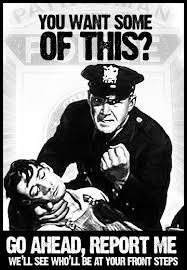
COURT REFUSES TO RESPOND TO REQUEST FOR COMMON LAW ACCESS TO PUBLIC RECORDS

Standard

 COURT CONTINUES TO REFUSE TO REPLY TO

COMMON LAW RIGHT OF ACCESS REQUESTS

Justice GaggedCOURT WILL NOT EXPLAIN OR REPLY TO:

FALSE IMPRISONMENT ON 8/19/2013

COMMON LAW RIGHT OF ACCESS TO COURT RECORDS

REQUESTS FOR COURT ORDER CLARIFICATIONS


Here is the letter I just sent to the Administrative Office of the Court (AOC) and Judge Glenn Grant (Acting Director of the Courts – New Jersey) in response to his letter to me complaining about emails and my OPRA and Common-law-right-of-access request.

DOCUMENT HISTORY:

COURT’S LETTER REFUSING TO ANSWER: 2014-08-28 LTR from AOC Glenn Grant

MY LETTER DEMANDING ANSWERS: 2014-08-31- Ltrs to AOC Glenn Grant

 2014-08-07 TO 14 – LTRS – Biased Court

2014-08-10 – MERCER COUNTY COURT – SHERIFF ISSUES

2014-01-12 – THE LETTER PETITION- Chief Justice …


Kangaroo Court Judge


THE LETTER FROM NJ AOC

IS FULL OF SHENANIGANS AND MISREPRESENTATIONS OF FACTS


The letter from the AOC completely ignores the fact that in addition to the OPRA (open records / sunshine request) I sent to the Sheriff’s Office my prior letter to the court also contained a common-law right of access request.

Further: I had sent written letters via Postal Service to the Judges who mishandled my cases I asked for clarifications of orders over 10 months ago and nobody has responded.

I covered all of this in my reply letter.

I stood up for my right to petition the court / government via email as a litigation privilege and 1st Amendment Right. 

My right to do so is also likely covered by Article I of the New Jersey State Constitution of 1947 in paragraph 18 (right to petition the government for redress of grievances).

As such it is my position that given the separation of powers the court is powerless to control my right to petition the government as granted to me by the New Jersey Legislature. I do not believe the Judiciary can revoke a privilege provided to me by the Legislature without due-process under the law.

This is where I am at… I hope I can coerce a written reply to my long-dated requests to the court.

You Can Follow Our News & Research On your Phone with RSS Feeds

Standard

RSS FEEDS

DOWNLOAD RSS FEED APP &

FOLLOW NJ COURT CORRUPTION

ON ANY MOBILE DEVICE


STEPS FOR FOLLOWING OUR THREE (3) WEBSITES

ON YOUR MOBILE DEVICE:


1. Download an RSS Feed Reader from Google Play or the Apple Store:

APP FOR ANDROID PHONES:  RSS DEMON APP (Recommended)

  • RSS Demon (Click Link)
  • Simple to Use App. You can customize, add, delete feeds

  • Download App here: (Click Link)

APPS FOR iPHONE: Choose Any of these apps:

DOWNLOAD FROM THESE LINKS:

2. Add the NJCourtCorruption.com RSS Feed Link from the App menu

  • COPY AND PASTE NJCourtCorruption.com  Feed Address into the RSS Application you chose.

  • RSS FEED ADDRESS: njcourtcorruption.com/feed

3. ADD NEWS FEEDS FROM OUR SISTER SITES AS WELL:

NEW JERSEY PRO SE RESEARCH(Click to Visit Website)

  • Description: Scholarly research about how people can better represent themselves in New Jersey Courts
  • Disclaimer: The site is only for research purposes and does not represent legal advice from a lawyer.

NEW JERSEY FAMILY COURT STORIES (CLICK to Visit Website)

  • Description: A site dedicated to exposing the horror stories from within NJ Family Courts and Courts around the Country


GET OUR NEWS ON MOBILE PHONES

RSS News Feed

I FILED THIS LETTER BRIEF & REQUEST FOR NJ SUPREME COURT RULING

Standard

Gavel Stopper


LETTER BRIEF

A CONSTITUTIONAL CHALLENGE

I filed a letter brief to challenge two issues related to the judicial misconduct I endured in Burlington County Superior Court at the hands of Judge Ronald Bookbinder and his accomplice John Tomasello (Retired & Recalled Judge).

The issues in dispute are:

  • UNLAWFUL RESTRAINTS OF MY LITIGATION PRIVILEGES, INCLUDING:
    • ORDERS THAT PROHIBITED ME FROM APPEARING IN COURT AT MY OWN TRIALS. 
    • RESTRAINTS AGAINST MY CONTACT WITH THE COURT OMBUDSMAN (ACCESS TO THE COURT).
    • RESTRAINTS AGAINST MY ACCESS TO THE COURT TELEPHONICALLY OR IN PERSON DURING MY LITIGATION.
    • SEE THESE OUTRAGEOUS COURT ORDERS HERE: COURT ORDERS BOOKBINDER
  • ASSIGNMENT OF A RETIRED JUDGE TO HEAR MY CASE MAY BE A VIOLATION OF THE N.J. CONSTITUTION.

Kangaroo Court Judge

Here is the letter brief in its current form:

2014-08-22 – LETTER BRIEF 2 – OPPOSING RECALL JUDGES


CONCLUSION:

I MAKE JUDICIAL RETALIATION LESS FUN FOR ALL

cropped-gadsen-flag1.jpg


TODAY: FOR 2ND TIME: I WAS DETAINED / ARRESTED BY SHERIFF’S OFFICERS

Standard

Bad Cop

TODAY: 8/22/2014 –

DEJA VU… I WAS FALSE ARRESTED 8/19/2013 AT THE SAME COURT HOUSE… NO OFFICIAL EXPLANATION HAS YET BEEN PROVIDED DESPITE MY LETTERS TO THE COURT REQUESTING AN EXPLANATION VIA COMMON-LAW RIGHT OF ACCESS.

I drafted subpoenas for the FV team leader, court clerk, Catherine Fitzpatrick, and Mary C. Jacobson with regard to my re-opened dockets in Burlington County.

I went to the the Mercer County vincinage of THE SUPERIOR COURT OF NEW JERSEY to get the clerks steal placed upon the Subpoenas prior to serving the same.

THE CLERK REFUSED TO PROVIDE THE SEAL. I WAS TOLD I WOULD HAVE TO GO TO BURLINGTON TO GET THE SEAL. At that point I said that I would allow the woman at the clerks window to serve the subponas via interoffice mail, if she refused to provide the clerks seal. SHE THEN REFUSED TO ACCEPT THE DOCUMENTS AND TOLD ME TO TAKE THEM BACK.

… I THEN REFUSED, and said I consider the documents served since you presented one of the subjects (the FV Team Leader Doug Meckel) with his subpoena, I expect the court to deliver the remainder of the subpoena’s to the subjects who all work here at the court.

====================
After I got out of the elevator
on the ground floor
====================

I was surrounded by 3 Sheriff’s officers (a fourth joined later).

I was told I could not leave the court house.

I asked the Sheriff’s Am i being detained or am I free to go.

Officer Parent said: You are being detained until I figure this out.

The fat black lady at the clerks window then came over to the 2nd floor balcony and said I had left my subpoenas at the clerks window and that I needed to take them with me.

I said: I refuse to touch those papers. They are served.
================
NARRATIVE:
================

The sheriff’s officers told me to step away from the exit

They tried to tell me I couldn’t serve papers after 4:30 because the court was closed.

I told them I arrived before 4:30 and was at the clerks window before 4:30.

I then explained that the Superior Court of New Jersey is “ONE COURT” the clerks here can place seals upon my documents, because ITS ONE COURT. Regardless of which vincinage I appear at all “court clerks” are operating under the authority of THE CLERK OF THE COURT MICHELLE SMITH… WHO ISN’T PRESENT AT ANY SUPERIOR COURT LOCATION.

I THEN ASKED am I free to go or am I under arrest?

Officer Parent: told me that I could not leave and he physically pushed me away from the exit of the court house.

I then told Officer Parent: You just assaulted me. Do not touch me unless you are going to arrest me.

A fourth officer came over and I asked him am I under arrest or free to go. He said the court closed at 4:30 and I needed to leave. I

I told him I’ve been trying to leave for 10 minutes but Officer Parent has arrested me without any probable cause.

He then told me I could go and I left.
========================================
LEGAL ISSUES:
========================================

1. Obstruction of Justice, denial of access to the court (exit)

2. Assault: Officer Parent pushed me

3. My quasi-judicial immunity as attorney-in-fact was not respected by the court

4. My litigation privilege was revoked by staff members of the Court and / or sheriff’s Officers… pursuant Loigman v. Middltown (2006) I can not be sanctioned or punished for communicating with the court or attempting to serve process for cases that are open before the court, when I act as attorney in fact.

5. U.S.C. 18 Section 241 & 242. I went to the FBI office and reported civil rights violations and the assault to the FBI and asked for a full investigation.
===========================================
I RECORDED MY INTERACTIONS WITH COURT STAFF
AND THE SHERIFF’S OFFICERS
===========================================

THE ENTIRETY OF THE ABOVE CONCERNS ME GREATLY AND I DEMAND A RESPONSE FROM THE COURT AND THE SHERIFF’S OFFICE.

I CONTINUE TO BE HARASSED AND INTIMIDATED FOR SIMPLY SEEKING JUSTICE VIA THE LEGAL PROCESS.

Derek C. Syphrett

HERO JUDGE: JUSTICE ALBIN SUPPORTS: DV Defendant’s Right to Counsel

Standard


Judge TRUTH IS NO DEFENSE

IF I WAS A POOR  PRO-SE I WOULD FILE THIS LEGAL ARGUMENT PRE-TRIAL TO GET A LAWYER FOR FREE

HERE IS HOW I WOULD DO IT:

(Dislaimer This is not Legal Advice. I am not A lawyer.

This is simply what I would do in if I was poor and was facing a false DV Charge)

1) I would copy and paste Justie Albin’s Legal Argument and submit it to the trial court pre-trial to get a free lawyer if I was poor

2) I would do this as an immediate appeal and caption it with the “pleading” ” 1)REQUEST FOR COUNSEL FOR INDIGENT DEFENDANT”, “2) REQUEST TO PROVIDE FINANCIAL DETAILS TO SUPERIOR COURT JUDGE TO CONFIRM MY INDENGENCY

3) i WOULD THEN INCLUDE A SHORT SUMMARY OF MY INCOME AND BANK ACCOUNT BALANCES UNDER THE TITLE “STATEMENT OF FACTS”, I WOULD STATE THAT I AM THE DEFENDANT IN A DV CASE.

4) I WOULD THEN INSERT A TITLE “LEGAL ARGUMENT” AND COPY AND PASTE JUSTICE ALBINS DISSENT BELOW AND USE IT AS MY LEGAL ARGUMENT.

I BELIEVE NEW JERSEY COURTS ARE READY TO EVOLVE

SEE LEGAL ARGUMENT BELOW

Lady Justice Soldier


========================================================
JUSTICE ALBINS 9 PAGE AUTHORITATIVE DISSENT
SUPPORTING INDIGENT / POOR PEOPLES RIGHT TO A LAWYER IN DOMESTIC VIOLENCE CASES
========================================================

D.N. v. K.M. (

429 N.J. Super. 592,  2014)

From: C-808 September Term 2012


==============================

JUSTICE ALBIN

A REAL AMERICAN HERO (JUDGE)

(See Albins Dissent & Invitation for a Brave Pro Se to Set a Date at the N.J. Supreme Court)

==============================

Greatest American Hero
 MAJORITY OPINION  OF JUSTICES DID NOT GRANT RIGHT TO COUNSEL
 
THE DISSENT WOULD HAVE…
 
READ THE DISSENT BECAUSE THIS IS WHAT MEN NEED TO FILE
IN ORDER TO CHANGE THE LAW IN NJ:
 
 
SUMMARY OF MAJORITY OPINION
NJ SUPREME COURT:

(App. Div. 2013). Consistent with current law, the Appellate Division concluded that “the protections of due process do not require the appointment of counsel for indigents presenting or defending a private party’s civil domestic violence action.” Id. at 606.

The dissent recommends that the Court grant certification in this case and examine whether counsel should be appointed for indigent 1 citizens in civil proceedings under the Prevention of Domestic Violence Act (Act), N.J.S.A. 2C:25-17 to -35. The Act itself does not authorize appointment of counsel for the parties in a domestic violence action. In that regard, New Jersey is not alone.

Only one state provides for appointment of counsel for both parties under comparable civil domestic violence laws. See N.Y. CLS Fam. Ct. Act 262(a)(ii). Thus, without any statutory authority, a directive from this Court requiring appointment of counsel would rest on constitutional grounds. To be sure, such a ruling would affect thousands of cases annually.


For the last court year alone, from July 2012 through June 2013, there were approximately 15,800 hearings for final restraining orders, according to the Administrative Office of the Courts (AOC).


The AOC estimates that the vast majority of plaintiffs and defendants in those hearings were not represented by counsel. By way of comparison, there were a total of about 1200 Madden1 appointments for the year, and roughly two-thirds of them were for contempt proceedings in domestic violence cases. In any event, this case is not a good vehicle to embark on a constitutional analysis of the issue presented because, based on the record before us, petitioner did not assert that she was 1 Madden v. Delran, 126 N.J. 591′


SUPREME COURT “PUNTS” BECAUSE:

DEFENDANT NEVER ASKED FOR FREE LAWYER


(2010). The panel observed that “[t]he record does not reflect that defendant ever sought the appointment of counsel prior to or during the adjudication of this domestic violence matter. Accordingly, in the present setting, the issue is purely academic.” Ibid. The same is true here.

The petition for certification is denied. See R. 2:12-4. CHIEF JUSTICE RABNER and JUSTICES LaVECCHIA, PATTERSON, and FERNANDEZ-VINA, and JUDGES RODRÍGUEZ and CUFF (both temporarily assigned) join in this per curiam opinion. JUSTICE ALBIN filed a separate, dissenting opinion. 3 SUPREME COURT OF NEW JERSEY C-808 September Term 2012 072186 D.N., Plaintiff-Petitioner, v. K.M., Defendant-Respondent.


JUSTICE ALBIN WRITES A GREAT

DISSENTING OPINION FOR:

POOR DEFENDANT’S RIGHT TO COUNSEL IN DV CASES


Gavel Stopper


Today, my colleagues refuse to hear a case that raises significant questions about the fairness of our civil justice system — a case that meets every criterion for the grant of certification under our Court Rules. See R. 2:12-4. D.N. has filed a petition for review of D.N. v. K.M.,429 N.J. Super. 592

(App. Div. 2013), in which the Appellate Division held that an indigent defendant is not entitled to appointed counsel when prosecuted for violations of the Prevention of Domestic Violence Act (“Domestic Violence Act”), N.J.S.A. 2C:25-17 to -35.

That decision cuts against the grain of a long line of jurisprudence in New Jersey guaranteeing the right to counsel to impoverished defendants facing consequences of magnitude, even in civil cases.


The Appellate Division ruled that a poor defendant has no right to appointed counsel in a domestic violence case despite the enormity of consequences that flow from a violation of the Domestic Violence Act.

Thus, a defendant mother, who is found to have violated the Act, could lose custody of her children and possession of her house; could face crushing financial penalties and placement of her name on an offender registry, jeopardizing her ability to secure employment, credit and housing; and could forfeit her right to possess a firearm.

The loss of these rights and imposition of these penalties may occur on an unlevel playing field where an inarticulate defendant, ignorant of the law and courtroom procedures, is 2 prosecuted by a well-trained, skilled, and experienced attorney representing the opposing party. The issue before the Court is not “purely academic” as my colleagues contend. D.N. v. K.M., __ N.J. __, __ (slip op. at 3) (quoting Crespo v. Crespo,

408 N.J. Super. 25

, 45 (App. Div.

2009), aff’d o.b.,

201 N.J. 207

(2010)). My colleagues rely on Crespo, supra, 408 N.J. Super. at 45, a case in which the Appellate Division declined to address the issue of the right to appointed counsel in a domestic violence case. Unlike Crespo, here the Appellate Division decided the issue, and its ruling stands as the law of the State until this Court says otherwise. My colleagues cannot expect that an uncounseled defendant, such as D.N., would know to assert her right to appointed counsel in a domestic violence case. It was the obligation of the Family Court to advise her of that right, which did not happen here. Importantly, D.N. argued on appeal (when represented by counsel) that she was indigent and had the right to appointed counsel, and the Appellate Division addressed the issue in a published decision. I do not understand how my colleagues can say that “this case is not a good vehicle to embark on a constitutional analysis of the issue presented,” D.N., supra, __ N.J. at __ (slip op. at 2), when the issue was presented to and decided by the Appellate Division. 3 Last year marked the fiftieth anniversary of the landmark ruling in Gideon v. Wainwright,372 U.S.335,83 S. Ct. 7929 L. Ed. 2d 799

(1963), a case trumpeting the right to counsel for the indigent in criminal cases. After Gideon, this Court took a giant step forward — far ahead of other courts in the nation — to secure for the poor the opportunity for equal justice in courtrooms throughout this State. See Rodriguez v. Rosenblatt,

58 N.J. 281(1971).

The right to counsel is an essential attribute of a fair trial. The denial of this petition will surely disappoint those who expect this Court to remain at the forefront of ensuring a fair adversarial process for the poor who face serious consequences of magnitude in civil cases.


=============================================================

For the reasons I have given and for those that follow, I respectfully dissent.

=============================================================

Gavel Stopper

=============================================================

I. In Rodriguez, supra, this Court held that “as a matter of simple justice, no indigent defendant should be subjected to a conviction entailing imprisonment in fact or other consequence of magnitude without first having had due and fair opportunity to have counsel assigned without cost.” 58 N.J. at 295 (emphasis added). In Rodriguez, we recognized that, in our adversarial system, defendants untrained in the complexities of the law are disadvantaged and in no position to represent themselves. Ibid. Because the practicalities of life did not permit for “a universal rule for the assignment of 4 counsel to all indigent defendants,” we accepted that the denial of counsel “may be tolerable” in cases where litigants face no “serious consequence.” Ibid.


But we were unwilling to abide the denial of counsel to an indigent defendant who faced a “consequence of magnitude.” Ibid. In the wake of Rodriguez, the landscape of the law changed in New Jersey, and our Court Rules reflect this new reality.


Now, under Rule 7:3-2(b), if an indigent defendant is facing a “consequence of magnitude” in a municipal court case, he or she must be assigned a municipal public defender. In the municipal court setting, the potential imposition of a sentence of imprisonment, a period of license suspension, or even a monetary sanction of $750 or greater, each individually, constitutes a “consequence of magnitude” entitling a defendant to the appointment of counsel. Guidelines for Determination of Consequence of Magnitude, Pressler & Verniero, Current N.J. Court Rules, Appendix to Part VII at 2503 (2014). In deciding Rodriguez, we did not hinge our decision on the number of defendants who might be entitled to appointed counsel. We did not suggest that for defendants facing consequences of magnitude, the right to appointed counsel — and therefore the right to a fair trial — depended on a cost analysis. Had the United States Supreme Court taken the cost-analysis approach, Gideon would not be on the books today, nor would Rodriguez. My colleagues note in their per curiam opinion that “last court year alone, from July 2012 through June 2013, there were approximately 15,800 hearings for final 5 restraining orders, according to the Administrative Office of the Courts (AOC).” D.N., supra, __ N.J. at __ (slip op. at 2).


However, during that same period, according to the AOC, our court system disposed of 35,641 driving-while-intoxicated cases, and in every one of those cases involving an indigent defendant, the right to appointed counsel was guaranteed. Our approach has not been that if too many indigent defendants require counsel, we will provide counsel to none. Appointed counsel, moreover, is provided to many thousands of criminal defendants, and to a multitude of defendants in civil cases, as is evident below.


II. An indigent defendant must be assigned counsel in civil cases if he is facing imprisonment for failure to pay child support, Pasqua v. Council,186 N.J. 127, 149 (2006); termination of parental rights, N.J. Div. of Youth & Family Servs. v. B.R.,192 N.J. 301, 306-07 (2007); tier classification for community-notification purposes in a Megan’s Law case, Doe v. Poritz, 142 N.J. 1, 31 (1995); involuntary civil commitment, In re S.L.,94 N.J. 128, 142 (1983); and contempt proceedings for violating a restraining order, State v. Ashford,374 N.J. Super. 332,337 (App. Div. 2004).


Yet, a defendant who is prosecuted for an act of domestic violence is not entitled to counsel even though he faces a host of consequences of magnitude,including:

  • an order expelling him from his  home, N.J.S.A. 2C:25-29(b)(2);

  • barring him from having contact with his children, N.J.S.A. 2C:25-29(b)(3)(b),
  • or suspending his custodial rights to his children, N.J.S.A. 2C:25-29(b)(11);

  • compelling him to pay compensatory and punitive damages, N.J.S.A. 2C:25-29(b)(4),
  • or emergency monetary relief, N.J.S.A. 2C:25-29(b)(10); seizing his firearms, N.J.S.A. 2C:25-29(b)(16),
  • and suspending his right to own a firearm or retain a firearms permit, N.J.S.A. 2C:25-29(b);

  • restraining him from entering places frequented by the plaintiff or the plaintiff’s family or household members, N.J.S.A. 2C:25-29(b)(6);
  • requiring him to undergo a psychiatric evaluation, N.J.S.A. 2C:25- 29(b)(18), or professional counseling, N.J.S.A. 2C:25-29(b)(5);

  • dispossessing him of an automobile, N.J.S.A. 2C:25-29(b)(9), or a family animal, such as a dog, N.J.S.A. 2C:25-29(b)(19);
  • mandating that he submit to fingerprinting, N.J.S.A. 53:1-15; placing his name on a central registry for domestic violence offenders, N.J.S.A. 2C:25-34;

  • requiring him to report to the intake unit of the Family Court for monitoring, N.J.S.A. 2C:25-29(b)(15), and imposing other restrictions on his liberty and property interests.


This catalogue underscores that “[t]he issuance of a final domestic violence restraining order ‘has serious consequences to the personal and professional lives of those who are found guilty of what the Legislature has characterized as a serious crime against society.’” Peterson v. Peterson,374 N.J. Super. 116, 124 (App. Div. 2005) (quoting Bresocnik v. Gallegos,367 N.J. Super. 178, 181 (App. Div. 2004)).


The inescapable reality is that a finding that one has committed an act of domestic violence, in addition to everything else, 7 brands that person as a “batterer.”

The stigma of that branding is recorded in the Domestic Violence Registry, N.J.S.A. 2C:25-34, and has far-reaching effects.

How can our jurisprudence reconcile the right of appointed counsel to a defendant facing a $750 fine or a one-day license suspension in municipal court with the denial of that right to a defendant who is facing much more serious consequences in Superior Court in a domestic violence case?


Yet, the appellate panel in this case held that “[t]he entry of a domestic violence [final restraining order], along with an order granting the additional relief available under N.J.S.A. 2C:25-29b, does not result in a ‘consequence of sufficient magnitude’ to warrant the mandatory appointment of counsel.” D.N., supra, 429 N.J. Super. at 604.

The appellate panel’s decision does not appear to reflect the holdings or the spirit of our jurisprudence.

In Pasqua, [THE CASE THAT GIVES “DEADBEAT DADS THE RIGHT TO COUNCIL IN CIVIL COURT] supra, we made clear that “[u]nder the due process guarantee of the New Jersey Constitution, the right to counsel attaches even to proceedings in which a litigant is not facing incarceration.” 186 N.J. at 147. We acknowledged that “the adverse consequences of a particular civil proceeding can be as devastating as those resulting from the conviction of a crime.” Id. at 142.


The assistance of counsel is an indispensable component of the right to a fair trial in an adversarial proceeding. “A person of impoverished means caught within the tangle of our criminal or civil justice 8 system” who is facing a consequence of magnitude should have “the assistance of a trained and experienced lawyer.” See id. at 146.

In Pasqua, we could “find no principled reason why an indigent facing loss of motor vehicle privileges or a substantial fine in municipal court . . . would be entitled to counsel under state law but an indigent facing jail for allegedly willfully refusing to pay a child support judgment would not.” Id. at 149. What principled reason can be found to deny an indigent defendant, facing so many consequences of magnitude in a domestic violence case, the right to appointed counsel, when counsel is provided to a municipal court defendant who may be fined $750? Certainly, this is an issue worthy of review.

III. The petition before us meets every ground for certification under Rule 2:12-4.

The petition “presents a question of general public importance” that has not been settled by this Court, the appellate panel’s holding and reasoning “is in conflict with” decisions of this Court, and, last, it is in the “interest of justice” that this Court determine whether indigent citizens can be deprived of significant rights in a domestic violence hearing without the assistance of counsel. See R. 2:12-4.


With Gideon and Rodriguez as our guides, it is difficult to imagine a case presenting a more compelling issue for review: the 9 right of indigent defendants, who are facing calamity, to a fair shake in our civil justice system. I am not willing to turn away from this important issue.


Because I would grant certification, I respectfully dissent.


AMEN JUSTICE ALBIN!

THE SUPREME COURT MUST SOMEDAY

ADDRESS THIS ISSUE

Gavel Broken

IF I WERE POOR, AND I WERE  CHARGED WITH A DOMESTIC VIOLENCE CHARGE. I WOULD:

  1. FILE AN “IMMEDIATE APPEAL” AND
  2. SUBMIT JUSTICE ALBINS ARGUMENT
  3. AND REQUEST A FREE LAWYER TO REPRESENT ME

Hero Judge: NJ Appellate Judge Harris Dissents in Support of NJ Constitution

Standard


THE MOST FRUSTRATING ASPECT OF THE JUDICIARY IS:

THE FACT THAT:

ONLY A FEW JUDGES UNDERSTAND THE CONSTITUTION,

THANKFULLY JUDGE HARRIS IS ONE OF THOSE JUDGES

Lady Justice Soldier


THE ISSUE:

RECALLING RETIRED JUDGES

IS UNCONSTITUTIONAL

(State of New Jersey v. James Buckner)

(LINK TO: FULL STATE V. BUCKNER DECISION)

The New Jersey Judiciary has granted itself the authority TO APPOINT RETIRED JUDGES BACK TO ACTIVE SERVICE, CONTRARY TO THE NEW JERSEY CONSTITUTION.

Unlike almost all other Judicial Appointments: These appointments occur without the oversight of the legislative or executive branch.

Worse these appointments allow Judges who retired in infamy to return to the bench as the result of political considerations within the judiciary, but without any recourse by the public or the other two “equally” powerful branches of the New Jersey Government.

This means: Judges in New Jersey can serve without consent of the citizens of this state by judicial fiat.

[As a result I HAVE FILED A LEGAL BRIEF IN SUPERIOR COURT AND REQUESTED MY ARGUMENT BE PRESENTED TO THE SUPREME COURT OF NEW JERSEY AS A CONSTITUTIONAL CHALLENGE TO THE USE OF A RETIRED JUDGE IN MY CASE – I DENY CONSENT FOR THE SAME.]


[HERE IS MY LEGAL BRIEF ON THIS TOPIC:

LEGAL BRIEF 2-2 – OPPOSING RECALL JUDGES


ENTER JUDGE JONATHAN HARRIS

A REAL AMERICAN HERO

Greatest American Hero


PRESENTING:

JUDGE HARRIS, J.A.D. & HIS SCATHING DISSENT FROM HIS COLLEAGUES:

Harris, J.A.D., dissenting.

“I. [POINT ONE]”

“Warning: the elegantly pragmatic approach of the able and well-researched opinion of my colleagues may seduce the reader into undiscerning agreement. I urge caution and a willingness to disagree.

The majority endorses the thirty-nine-year utilization of Section 13(b) of the Judicial Retirement System Act (the JRSA), N.J.S.A. 43:6A-1 to -47, as a proper source, and apt means, of conferring judicial power upon septuagenarians who once were Superior Court15 judges but “retired on pension or retirement allowance” and are then “recalled by the Supreme Court for temporary service within the judicial system other than the Supreme Court.” N.J.S.A. 43:6A-13(b). Those familiar with our publicly funded system of dispute resolution recognize that such recall judges “serve[] the people of New Jersey with skill, diligence and integrity.” DePascale v. State, 211 N.J. 40, 93 (2012) (Patterson J., dissenting). Alongside active judges, this grey-haired army of retiree jurists cloaked yet again with their former sovereign authority by N.J.S.A. 43:6A-13(b) and -13(c) reliably deliver tangible benefits for “real parties and actual people who are trying to vindicate their rights as they await justice.” Henry v. N.J. Dep’t of Human Servs., 204 N.J. 320, 340 (2010) (Rabner, C.J., concurring).

The problem, however, is that the statute and, inescapably, the long-standing practice of deploying recall troops for temporary judicial service are both unconstitutional. Accordingly, I dissent.

[ROGER THAT JUDGE HARRIS:

THE SCALES ARE BURNING !!!

Scales Flaiming

…JUDGE HARRIS CONTINUED

…FOR A LONG WHILE:]

[POINT TWO] II.

A.The standard of review that governs this case is formidable: has defendant James Buckner demonstrated, beyond a reasonable doubt, see Gangemi v. Berry, 25 N.J. 1, 10 (1957), that Article VI, Section 6, Paragraph 3 of the New Jersey Constitution (the Judicial Retirement paragraph) was intended by its framers and the people who adopted it in 1947 to not permit the Legislature to authorize reinstatement of this state’s judicial power to pensioner judges?17 Because the enabling legislation N.J.S.A. 43:6A-13(b) that purports to accomplish this (1) offends the plain “shall be retired upon attaining the age of 70 years” language of the Judicial Retirement paragraph, and (2) irreparably rends the Constitution’s fabric of separation of powers by legislatively authorizing the Supreme Court rather than the Governor to make the selection decisions to implement recalls, the high threshold of presumptive constitutionality has been surmounted.

Even with awareness of the admonition that it is the “policy of our law not to invalidate a statute which has been in force without substantial challenge for many years,”


I cannot stand mute when a statute’s unconstitutionality is obvious.

18 In re Loch Arbour, 25 N.J. 258, 265 (1957). “It is a familiar rule of construction that where phraseology is precise and unambiguous there is no room for judicial interpretation or for resort to extrinsic materials. The language speaks for itself, and where found in our State Constitution the language is the voice of the people.” Vreeland v. Byrne, 72 N.J. 292, 302 (1977); see also The Federalist No. 78 (Alexander Hamilton) (“[T]he Constitution ought to be preferred to the statute, the intention of the people to the intention of their agents.”). In the present case, I see nothing that permits the placement of executive powers within the orbit of our highest court. The law, while arguably well-informed and foresighted from a policy standpoint, cannot withstand constitutional scrutiny, and we should say so, even after almost four decades of going unchallenged.19 See Marbury v. Madison, 5 U.S. (1 Cranch) 137, 177, 2 L. Ed. 60, 73 (1803) (“It is emphatically the province and duty of the judicial department to say what the law is.”).

B.

The majority observes that the Judicial Retirement paragraph licenses the practice of recalling post-age-seventy former judges because it “does not bar a retired judge from being recalled for temporary service.” Ante at ___ (slip op. at 26). However, nothing in the Constitution authorizes it. Does the majority believe that, in the absence of enabling legislation, the Constitution’s silence would permit, hypothetically, the implementation of an ad hoc recall-of-retired-judges system by, say, the Supreme Court on its own initiative, or the Governor through an Executive Order, or the Legislature by joint resolution? I doubt it. Thus, the essence of the present analysis focuses not just upon what is left unsaid by the Constitution, but also upon the question of whether the particular statute is a valid exercise of legislative power.

I start with the language of the Constitution’s Judicial Retirement paragraph, which, in pertinent part, states the following:

The Justices of the Supreme Court and the Judges of the Superior Court shall hold their offices for initial terms of 7 years and upon reappointment shall hold their offices during good behavior . . . . Such Justices and Judges shall be retired upon attaining the age of 70 years. Provisions for the pensioning of the Justices of the Supreme Court and the Judges of the Superior Court shall be made by law.

[N.J. Const. art. VI, 6, 3 (emphasis added).]

The plain language of the Judicial Retirement paragraph must be construed with thorough attention to the framers’ choice of language, noting not only what they included, but also what they excluded from the document presented to, and approved by, the people in November 1947. “The polestar of constitutional construction is always the intent and purpose of the particular provision.” State v. Apportionment Comm’n, 125 N.J. 375, 381 (1991). Although a literal reading of a constitutional declaration may be rejected when it is inconsistent with the spirit, policy, and true sense of the declaration, Lloyd v. Vermeulen, 22 N.J. 200, 205-06 (1956), “‘the words employed [in the Constitution] have been carefully measured and weighed to convey a certain and definite meaning, with as little as possible left to implication . . . .'” Apportionment Comm’n, supra, 125 N.J. at 382 (citation omitted).

The phrase “shall be retired upon attaining the age of 70 years,” simply connotes (1) the compulsory abdication of a judicial office; (2) the surrender of judicial power previously conferred by N.J. Const. art. VI, 1, 1; and (3) the permanent loss of the ability to exercise for the benefit of the public the sovereign functions of government that had previously been made possible by the Governor’s selection, with the advice and consent of the Senate. See N.J. Const. art. VI, 6, 1.

I conclude that there is nothing about the plain language of the Judicial Retirement paragraph that supports the majority’s view.


Alternatively, the majority “discern[s] a clear, compelling distinction between the proscriptive language in the Schedule Article against ‘hold[ing] office’ and the ‘shall be retired’ terminology used in the Judicial [Retirement paragraph].” Ante at ___ (slip op. at 26-27). This is comparing apples to oranges.

[OUCH… HE JUST OWNED THE MAJORITY!]

SHAME ON YOU

The majority favorably contrasts the proscriptive use of language in the Schedule Article “[n]o Justice of the new Supreme Court or Judge of the Superior Court shall hold his office after attaining the age of seventy years,” N.J. Const. art. XI, 4, 1 with the mere mandatory retirement language of the Judicial Retirement paragraph “[s]uch Justices and Judges shall be retired upon attaining the age of 70 years.” N.J. Const. art. VI, 6, 3. Ante at ___ (slip op. at 26). In the former phrase, where the framers used the word “office,” it was clearly limited and intended to punctuate the end of incumbency under the 1844 constitutional framework for those pre-modern-era judges who had transitioned to the Superior Court. The latter phrase was intended to deal with the new regime, and cannot be seen as keeping the door open for temporary recall where its object was to strip judges of their judicial authority at midnight immediately preceding their seventieth birthday.

Another reason why the majority discounts the significance of the absence of express recall authority in the Judicial Retirement paragraph is its interpretation of the provision’s evolution. I concede that the majority opinion accurately analyzes the 1947 proceedings of the Constitutional Convention, as far as it goes. In my view, however, it does not go quite far enough. The majority assumes that the Constitution’s final-draft silence with respect to recalling retired judges on an as-needed basis was in accord with the generalized philosophy that a constitution should deal with fundamental principles, not details. This is not only speculative, but also it is belied by the twenty-five-year span (1948 to 1973) that immediately followed the Constitution’s adoption, during which there was no recall legislation and no recall judges.

During the constitutional sausage-making that took place in New Brunswick in the summer of 1947, the Constitutional Convention’s Committee on the Judiciary participated in hours upon hours of spirited exchanges about court unification; the judicial selection process; trial periods for new judges and tenure; the appropriate age, if any, for a judge’s compulsory retirement;20 and judicial pensions. Yet, there were only a scant few minutes, best characterized as stray comments, devoted to conversations about the use of retired jurists as temporary judicial officers in the proposed new, unified court system. See 4 Proceedings of the Constitutional Convention of 1947 at 168-69; 190; 214-15. On July 30, 1947, one speaker, retired judge Robert Carey21 (also a Convention delegate and member of the Committee on Rights, Privileges, Amendments and Miscellaneous Provisions), while constructively criticizing the Committee on the Judiciary’s age-seventy retirement proposal, stated:

Why, most men don’t get high judicial positions until after they are 58 or 60, and they are 70 before they know it. To put them on the shelf then, or to make them law loafers of the State, what a mistake that would be! I’d say 75 at the lowest, and after 75 retire them. And then put them on the inactive list subject to the call of the Chief Justice, whoever he may be, at all times.

[4 Proceedings of the Constitutional Convention of 1947, supra, at 543 (emphasis added).]

Carey’s suggested retirement age was not adopted, and I submit that his recall-equivalent “inactive list” proposal was likewise consigned to the constitutional trashbin.

[In 1947 whe drafting the New Jersey Constitution] The framers’ failure to devote much attention to a temporary recall provision is understandable; they were struggling with much larger and more complex issues at the time. Nevertheless, the subject of post-retirement judicial service was clearly known to them. Among the sources of information made available to members of the Committee on the Judiciary during their seventeen days of meetings were fifty-five witnesses, plus “some two dozen persons” who presented their views on the Committee’s tentative draft of the Judicial Article, together with a wealth of written reports, monographs, and position papers. Among the writings are the proposal of the New Jersey Committee for Constitutional Revision, which included a provision “for mandatory retirement at age 70, . . . subject to possible recall to temporary service as need may appear,” 4 Proceedings of the Constitutional Convention of 1947, supra, at 580; 28, and a small mention in a June 5, 1947 New Jersey Law Journal editorial. See id. at 677. Leaving a recall provision out of the Constitution was neither an inadvertent oversight nor a nod towards simplicity of draftsmanship.

The majority accurately recounts the evolution of the Constitution’s Judicial Article from the May 1942 report of the Commission on Revision of the New Jersey Constitution (the Hendrickson Commission) up to the Judicial Article’s actual drafting in 1947. Ante at ___ – ___ (slip op. at 4-7). Also, the majority rightly notes that the 1944 Legislature modified and supplemented the Hendrickson Commission’s recommended judicial retirement language from

No justice or judge of any court shall continue in office after he has attained the age of seventy years.

[4 Proceedings of the Constitutional Convention of 1947, supra, at 562 (proposed art. V, 5, 3)]

to

No Justice of the Supreme Court or of the Superior Court shall continue in office after he has attained the age of seventy years; but, subject to law, he may be assigned by the Chief Justice to temporary service in the Supreme Court or in the Superior Court, as need appears.

[Id. at 569 (emphasis added) (proposed N.J. Const. of 1944 art. V, 5, 5).]

However, after observing that the people soundly rejected the proposed 1944 Constitution at the polls, the majority deems it “[s]ignificant[]” that “there is no indication in any of the historical sources, including the Proceedings on the Constitutional Convention of 1947, that the voters had objected to the recall of retired judges.” Ante at ___ (slip op. at 7).


What is significant is not the conjectural objection of putative voters, but rather, it is that the 1947 framers purposefully elected to omit the twenty-seven words that would have validated the present recall contrivance.

The majority chalks up the loss of this phrase to the principle of constitutional minimalism, but I fail to see how the addition of these utterly unassuming words would have violated Governor Driscoll’s call for “limiting our State Constitution to a statement of basic fundamental principles.” 1 Proceedings of the Constitutional Convention of 1947 at 7. The framers, and the people, had no problem including detailed managerial features in the Judicial Article, such as the appointment of an Administrative Director to serve at the pleasure of the Chief Justice, see N.J. Const. art. VI, 7, 1; provisions for the Chief Justice’s assignment of judges to the various Divisions of the Superior Court, see N.J. Const. art. VI, 7, 2; and authorization for the Supreme Court to appoint Clerks for the Supreme and Superior Courts. See N.J. Const. art. VI, 7, 3. If these provisions were deserving of inclusion in the Constitution, then a provision for recalling retired judges beyond seventy years of age was equally constitution-worthy.


Accordingly, I conclude that the excision of recall-authorization language that had appeared in the failed 1944 Constitution was purposive, even though there is no express record of its rejection in the public annals of the Committee on the Judiciary.


Because the authority to recall retired judges never made it into the Constitution, it may not be invoked sub silentio, legislatively or otherwise.

This conscious decision to omit a provision for the recall of judges is bolstered by the Constitutional Convention’s rejection of a proposed amendment to the Committee’s final draft of the Judicial Article, its so-called Proposal No. 4-1, which included a recall provision. That failed amendment, introduced by Committee member, retired Chief Justice Thomas J. Brogan, contained among its myriad adjustments, in pertinent part, the following:

Such Justices or Judges shall be eligible for retirement at the age of seventy years, but shall be retired at the age of seventy-five years. Upon the retirement of any such Justice or Judge he shall receive a pension equal in amount to the salary which he is receiving at that time. Such Justice or
Judge shall be required, if able so to do, to perform such judicial duties and services as may be required of him by designation or order of the Court of Appeals[.]

[2 Proceedings of the Constitutional Convention of 1947 at 1207 (emphasis added) (Amendment No. 1 to Committee Proposal No. 4-1, VII, 6).]

Based upon what went into the task of constitution-making at the beginning, and what came out at the end, I cannot agree with the majority that the Judicial Retirement paragraph is fluid enough to embrace the recall of judges who outlive their seventieth birthdays.

C.

Unlike the majority, I take no comfort in the exposition of the temporary recall provisions in other states. Ante at ___ – ___ (slip op. at 29-32). In fact, the leading case, Opinion of Justices, 284 N.E.2d 908 (Mass. 1972), while validating proposed legislation authorizing the temporary recall of retired judges of “the several courts of the commonwealth,” id. at 908, did so within a governmental framework entirely distinguishable from New Jersey’s. The Massachusetts recall paradigm, completely contrary to New Jersey’s open-ended provision,24 proposed to operate from a list of available jurists, vetted by the Massachusetts Governor with the advice and consent of that state’s elected Executive Council (roughly analogous to New Jersey’s Senate in its advice and consent modality). Id. at 909. We cannot measure the constitutionality of our recall platform from this dissimilar foreign source.

As it turns out, Opinion of Justices appears to have played an important, albeit misleading, role in changing the once accepted view that recall judges were not authorized by the Constitution, and which led to the adoption of N.J.S.A. 43:6A-13(b)’s predecessor statute in 1973. Once again, the majority’s canvass of the legislative history is accurate. See ante at ___-___ (slip op. at 16-18) (reflecting that before 1975 there was no statutory provision that permitted the recall of a retired judge or justice over the age of seventy years). However, some additional history may illuminate how the Supreme Judicial Court of Massachusetts helped get us to this point.

Opinion of Justices was decided on June 29, 1972. Eleven months later, on May 22, 1973, the JRSA became effective. L. 1973, c. 140. Among the many features of the new pension statute was the first authorization for the “assignment” not recall of retired judges, but only for those judges who had not attained the age of seventy:

Any judge retired on pension, except a judge of a municipal court, who has not attained the age of 70 years, may, with his consent, be assigned by the Chief Justice to sit in any court but the Supreme Court, or in the case of a retired justice of the Supreme Court, to sit in any court.

[L. 1973, c. 140, 13; N.J.S.A. 43:6A-13(b) (later amended by L. 1975, c. 14) (emphasis added).]

A few months later, in a January 31, 1974 New Jersey Law Journal editorial, the Law Journal Board noted that, unlike the senior judge system of the federal courts, “[i]n the New Jersey system no such practice exists.” Senior Judges, 97 N.J.L.J. 68 (Jan. 31, 1974). The editorial opined that the Constitution does not prohibit “the rendering of service by . . . retired jurists comparable to that performed by Senior Judges in the federal system.” Ibid. Consequently, it “urge[ed] that [N.J.S.A.] 43:6-6.39[25] be amended so as to permit the Chief Justice to assign ‘retired’ judges, whether they retire over or under the age of 70, to sit in any court other than the Supreme Court and to assign a retired Justice of the Supreme Court to sit in any court.” Ibid.

Two months later, another editorial confessed,

We have just had our attention called to Opinion of the Justices of the Supreme Judicial Court of Massachusetts, 284 [N.E.2d] 908 (1972), wherein that Court advised the Massachusetts Senate that a bill relating to service by retired judges would not contravene the proposed Massachusetts constitutional amendment, which provided that “upon attaining seventy years of age said Judges shall be retired.”

[Judicial Service For Judges Retired At Age 70 Who Wish Such Service, 97 N.J.L.J. 118 (March 21, 1974).]

In light of this decisional law, which supposedly fortified the Law Journal Board’s January 31 commentary, the editorial opined:

Here is a non-controversial proposal in which all can join for bringing back into the judicial system some of our most-experienced judges who are at the peak of their power.

[Ibid.]

Less than two weeks later, Assemblyman William J. Bate (an attorney and later Passaic County Surrogate) introduced what became Assembly Bill No. 1419, which ultimately was adopted as the present version of N.J.S.A. 43:6A-13(b). The misguided hand of Opinion of Justices indubitably played a role in changing our

law.26

As I have indicated, Opinion of Justices is not a proper vehicle to interpret our Constitution, even if the language of the judicial retirement provisions of the Massachusetts and New Jersey Constitutions are nearly identical. At the time the Massachusetts justices grappled with the issue, the Massachusetts Constitution had not yet even provided for compulsory judicial retirement upon reaching seventy years of age. Opinion of Justices, supra, 284 N.E. 2d at 911. The court noted that the proposed constitutional amendment, if adopted, “would require the immediate retirement of almost one-fifth of the present justices of the general trial courts of the Commonwealth.” Ibid. (quotation marks omitted). In its practical opinion validating the recall of retired judges, the court was rightly concerned that, without the ability to recall
judges,

approval of the proposed amendment would cause the immediate retirement of a substantial number of experienced judges. This would undoubtedly create great confusion and possible chaos throughout our entire judicial system . . . . To hold that the Legislature would be prevented from recalling retired judges to active service by the proposed amendment would greatly diminish the quality of justice for all.

[Id. at 913.]

However laudatory this urge to save the Massachusetts judicial system for the benefit of the people it served may be, exigency and pragmatism are insufficient impulses to either suspend our Constitution or fill a power vacuum with a novel solution. See Janouneau v. Harner, 16 N.J. 500, 514 (1954) (emergencies do not create or enlarge power); see also Commc’ns Workers of Am., AFL-CIO v. Christie, 413 N.J. Super. 229, 260 (App. Div. 2010) (citing Youngstown Sheet & Tube Co. v. Sawyer, 343 U.S. 579, 72 S. Ct. 863, 96 L. Ed. 1153 (1952)). I eschew the limited persuasive attributes of Opinion of Justices,27 and disagree with the majority that it, and any of the other states that have weighed in on the issue, got it right.

D.

I further differ with the majority because I believe that N.J.S.A. 43:6A-13(b) arrogates exclusive gubernatorial authority, impairs the essential integrity of the Chief Executive, and revokes senatorial prerogative, all of which violate separation of powers doctrine. In particular, N.J.S.A. 43:6A-13(b) does violence to the Constitution’s complementary goals of (1) ensuring a strong Chief Executive and (2) investing the Governor with the solitary, plenary power subject only to the advice and consent of the Senate of making judicial appointments:

The Governor shall nominate and appoint, with the advice and consent of the Senate, the Chief Justice and associate justices of the Supreme Court, the Judges of the Superior Court, and the judges of the inferior courts with jurisdiction extending to more than one municipality . . . . No nomination to such an office shall be sent to the Senate for confirmation until after 7 days’ public notice by the Governor.

[N.J. Const. art. VI, 6, 1.]

The Legislature’s delegation to the Supreme Court of the authority to select recall judges directly contravenes this

provision.28 It is no answer to suggest that in order to qualify as a recall judge, one had to have already run the nomination-appointment-and-confirmation gauntlet twice. That may be true, but upon retirement, a judge not only steps aside from and gives up his or her judicial power, but also expressly resigns his or her judicial office. See N.J.S.A. 43:6A-7 (requiring that, as part of the application for benefits under the Judicial Retirement System, the judge submit “a copy of the [judge’s] resignation from his [or her] judicial office which he [or she] has filed in the office of the Secretary of State”).29

I ask the following question: Would it be possible for the Legislature to bestow the power to recall retired judges upon, say, the President of the Senate, or a committee comprised of the deans of New Jersey’s law schools, or the Chief Justice

individually? I think not.30 Although there is logic and practicality to making the Supreme Court the arbiter of those in the ranks of retired judges who are recalled to active duty, there is not a constitutional whiff, much less one word, of such authority residing within the judiciary itself.

“The doctrine of separation of powers is fundamental to our State government.” Mt. Hope Dev. Assocs. v. Mt. Hope Waterpower Project, L.P., 154 N.J. 141, 150 (1998). The Constitution provides that “[t]he legislative power shall be vested in a Senate and General Assembly,” N.J. Const. art. IV, 1, 1, and “[t]he executive power shall be vested in a Governor.” Id. at art. V, 1, 1. By these provisions, our Constitution prohibits any one branch of government from exercising powers assigned to a coordinate branch. The separation of powers doctrine was designed to “maintain the balance between the three branches of government, preserve their respective independence and integrity, and prevent the concentration of unchecked power in the hands of any one branch.” David v. Vesta Co., 45 N.J. 301, 326 (1965) (footnote and emphasis omitted).

“Despite the explicit constitutional mandate that ‘contemplates that each branch of government will exercise fully its own powers without transgressing upon powers rightfully belonging to a cognate branch,'” the judiciary has “always recognized that the doctrine requires not an absolute division of power but a cooperative accommodation among the three branches of government.” Commc’ns Workers of Am. v. Florio, 130 N.J. 439, 449-50 (1992) (quoting Knight v. Margate, 86 N.J. 374, 388 (1981)). Moreover, it has been “long recognized that ‘[t]he compartmentalization of governmental powers . . . has never been watertight.'” State v. Loftin, 157 N.J. 253, 284 (1999) (quoting In re Salaries for Prob. Officers of Bergen Cnty., 58 N.J. 422, 425 (1971)). Additionally, a flexible approach to separation of powers issues is employed in cases that have been brought to the Court. Ibid.

Notwithstanding this practical and collaborative approach to government, “[t]he Governor (Executive) is authorized to nominate and appoint. The Senate (Legislative) is to advise and, before the appointment may be finally made, to consent.” Passaic Cnty. Bar Ass’n v. Hughes, 108 N.J. Super. 161, 173 (Ch. Div. 1969). “Missing from the Constitution is any role for the judiciary.” De Vesa v. Dorsey, 134 N.J. 420, 430 (1993). Thus, the legislative delegation of a mechanism to reinstate judicial power in a retired judge is unconstitutional.31

A related separation of powers concern is the unintended inertial effect that N.J.S.A. 43:6A-13(b) has upon the replacement of retiring judges. When judges retire (at age seventy or earlier), vacancies are created that need to be promptly filled by executive and senatorial action. See N.J.S.A. 2B:2-1.2 (requiring “the Administrative Office of the Courts [to] notify the Legislature as vacancies occur”). It is probable that the intangible political dynamics that affect why such prompt action does not often take place are not directly influenced by the recall statute. Nevertheless, the Supreme Court’s ability to insert its collective thumb through the enlistment of retired judicial elders in the levee of a never-ending caseload removes an incentive to appoint replacement judges. Although the effect of N.J.S.A. 43:6A-13(b) is hard to measure, with at least seventy-three retired judges more than sixteen percent of the total complement of authorized Superior Court judges toiling in the vicinages and on special assignments, there is an obvious disincentive to seed the judiciary with a fresh crop of judges. The recall statute creates an artificial supply of judges that satisfies an incessant and inevitable demand as active judges age or otherwise opt out of their judicial offices.

This is not a classic separation of powers phenomenon, but it is one that implicates a significant concern of the framers. Not only does the use of over-age-seventy jurists arithmetically drive up the average age of the institution, making it less representative of the people it serves, but also it constrains the institution’s ability to profit from the energy and fresh outlook of younger jurists. Cf. 4 Proceedings of the Constitutional Convention of 1947, supra, at 170 (memorializing the discussion between Judge Daniel J. Brennan and delegate Amos F. Dixon regarding the retirement of judges at a reasonable age to avoid “blocking the progress of a lot of very able men who could step into those positions if they stepped out”). If we were faithful to the Constitution, and no temporary assignments were possible, it is likely that public outcry would summon the political machinery necessary to swiftly invoke the nomination, appointment, advice, and consent processes to fill vacancies, and thereby fulfill the expectations of the framers for the benefit of the people.

E.

A fundamental disagreement between my views and the majority’s lies in the separateness of judicial power and the persons who may be authorized to exercise it. The challenged legislation indeed, all judicial recall legislation that does not follow a constitutionally-authorized appointment process operates on the unspoken assumption that “once a judge, always a judge.” This view necessarily must acknowledge that retired judges after resigning and qualifying for a judicial pension (which qualification is, among other things, a prerequisite for recall) retain latent embers of judicial authority that can be reanimated by Supreme Court recall orders. See N.J.S.A. 43:6A-13(c) (“Upon such recall the retired . . . judge shall have all the powers of a . . . judge of the court to which he is assigned . . . .”). The Constitution leaves no room for such restorative powers once a judge turns seventy years old,32 and I am loath to declare the discovery of such hidden potential in the face of the obstacles I have outlined.

Furthermore, retired judges have no essential need for this intangible spark because they are clearly not, as the majority attributes to me, trapped in some “irrevocable alienation of pensioner from title, a kind of sequestration, worse yet quarantine, rendering the judicial retiree incognito, isolated and idle, relegated to some sort of professional limbo, yet imprisoned by all the ethical restraints of a status and an office that somehow no longer exist.” Ante at ___ (slip op. at 28). Life after a judicial career may be either professionally robust or crabbed, but it is not dependent upon being available for temporary recall. And the ethical contours that guide judges’ conduct in retirement, see, e.g., N.J.S.A. 43:6A-13(a); Guidelines on the Practice of Law by Retired Judges, Administrative Directive #5-08 (March 24, 2008), are proper constraints that ensure the judiciary’s hallmark of independence, integrity, fairness, and quality service. After a public service career, a retired judge owes the institution at least that much.

F.

Notwithstanding its salutary purposes and practical success, N.J.S.A. 43:6A-13(b) cannot be justified when taking bearings from the Constitution. Historical acceptance cannot establish the statute’s bona fides, see Henry, supra, 204 N.J. at 345 (Rabner, C.J., concurring) (noting that “historical practice alone rarely proves the correctness of a legal proposition”), and historical patterns cannot save an unconstitutional practice.

I take final comfort in the recollection of Morris M. Schnitzer, who was asked in 1995, “Was it contemplated that judges, once retired at age 70, could be recalled?” Conversations with Morris M. Schnitzer, supra, 47 Rutgers L. Rev. at 1401. Schnitzer who was present during the Constitution’s conception, gestation, and birth unequivocally
responded: “Certainly not, since that would have resurrected the example of Justice Parker and others who sat long after their peak.” Ibid. If that is the way Schnitzer remembered it, who am I to disagree?

Accordingly, I dissent.

1 New Jersey was the third colony to adopt a Constitution. John Bebout, Introduction to Proceedings of the New Jersey State Constitutional Convention of 1844, at xvi (New Jersey Writers’ Project ed., 1942), available at http://lawlibrary. rutgers.edu/cgi-bin/diglib.cgi?collect= njconst&file= 1844_bebout&page=0001 (last visited on Mar. 6, 2014). The Constitution was ratified on July 2, 1776, only eight days after the appointment of the Constitutional Convention Committee. Ibid. “This haste may have been due partly to the arrival of the British Fleet off Sandy Hook.” Ibid.

2 There is no mandatory retirement age for judges appointed under Article III, Section 1 of the Federal Constitution.

3 All five volumes of these proceedings are available at http://slic.njstatelib.org/new_jersey_ information/ searchable_publications_0 (last visited on Mar. 6, 2014).

4 Available at http://lawlibrary.rutgers.edu/cgi-bin/diglib. cgi?collect=njconst&file=1942_comm&page=0001 (last visited on Mar. 6, 2014). Reprinted in 4 Proceedings of the Constitutional Convention of 1947, supra, at 556-65.

5 Available at http://lawlibrary.rutgers.edu/cgi-bin/diglib.cgi?collect=njconst&file=1944_rev&page=0001 (last visited on Mar. 6, 2014). Reprinted in 4 Proceedings of the Constitutional Convention of 1947, supra, at 566-74.

6 Jacobs, although acknowledged as the “principal sponsor of mandatory retirement” by Morris M. Schnitzer, was also later the primary architect of creating the recall provisions at issue. 4 Proceedings of the Constitutional Convention of 1947, supra, at 1; Conversations with Morris M. Schnitzer, 47 Rutgers L. Rev. 1391, 1401 (1995); see also post at 28-29. Justice Jacobs, by then serving on our Supreme Court, “promoted the idea as a way of dealing with emergencies and thereafter as a way of enlisting economical judicial service.” Conversations with Morris M. Schnitzer, supra, 47 Rutgers L. Rev. at 1401-02. Thus, although Schnitzer, who served as the Technical Advisor to the Committee on the Judiciary, rejected the idea that recall of judges over age seventy was contemplated by that body, Justice Jacobs, who served as the Vice-chairman of the committee and was “the author of every draft of the Judicial Article,” certainly saw no constitutional conflict between the mandatory retirement provision in the Constitution and the recall statute. Id. at 1391, 1393, 1401-02.

7 During the final open public session on July 30, 1947, several individuals expressed their views on the proposed compulsory retirement age of seventy. 4 Proceedings of the Constitutional Convention of 1947, supra, at 500, 515-16, 523-24, 531, 542-43. Additionally, Robert Carey, a former Hudson County Judge, argued that retired judges should be placed on an inactive list and subject to recall by the Chief Justice. Id. at 543.

8 Our Court “has often relied on the Judiciary Committee Report as an authoritative source” of constitutional intent. Henry v. N.J. Dep’t of Human Servs., 204 N.J. 320, 349 n.4 (2010) (Rabner, C.J., concurring). But see Winberry v. Salisbury, 5 N.J. 240, 248 (criticizing reliance on the Committee report), cert. denied, 340 U.S. 877, 71 S. Ct. 123, 95 L. Ed. 638 (1950).

9 Similar statutory provisions were later enacted for the recall of retired Workers’ Compensation judges, N.J.S.A. 34:15-49(a), and Administrative Law judges, N.J.S.A. 52:14F-4, who had not yet reached the age of eighty.

10 Minor revisions to N.J.S.A. 43:6A-13 were made by L. 1981, c. 470, 7, and L. 1990, c. 45, 1, but no substantive changes were made to the authority of the Supreme Court to recall justices and judges.

11 A review of the recall orders reveals that, as needed, some judges are recalled to specific assignments for short periods of time, and others serve on more general assignment for longer, albeit temporary terms. Thus, it is highly likely that some of the assignments might overlap, but that only one judge would be sitting in the position at any given time. We do not view these temporary assignments, as the dissent intimates, as unlawfully increasing the number of statutorily-authorized judicial positions, or extending their terms of office. Recall judges do not, by virtue of their assignment, “hold” an office that could become vacant upon termination of their powers either by death or operation of law. Indeed, it is only upon his or her recall in accordance with a statute as authorized by the Constitution that a judge may exercise any judicial power whatsoever, and this only during the period specified in the assignment and subject to whatever other conditions the Legislature sees fit to enact and the Supreme Court deems appropriate to impose.

12 Interestingly, several of the Justices in Lloyd, including Justice Jacobs, who wrote the opinion, and Chief Justice Vanderbilt, were well-qualified to discuss the framers’ intent as they had been members of the Committee on the Judiciary or presenters during the Constitutional Convention.

13 Thirty-two states and the District of Columbia provide for mandatory retirement at a given age. Some of these states also have a constitutional provision for the recall of retired judges. See, e.g., The Arizona Constitution, Ariz Const. art. VI, 20 (2013).

14 The Legislature has on at least two separate occasions amended other provisions of the recall statute, but left the language relevant here intact. See L. 1981, c. 470, 7; L. 1970, c. 45, 1.

15 Because the present appeal involves the recall of a Superior Court judge, it is unnecessary to address Supreme Court justices and Tax Court judges.

16 For this reason, I would vacate Buckner’s conviction, and order a new trial. I recognize that the venerable de facto officer doctrine, see Jersey City v. Dep’t of Civil Serv., 57 N.J. Super. 13, 27 (App. Div. 1959), might counsel against this course of action. However, in the interest of fairness and equity, this one litigant, who has successfully demonstrated that the trial judge was without judicial authority, is entitled to such a remedy.

17 Buckner’s reliance upon the schedule provisions of N.J. Const. art. XI, 4, 1, is wholly unpersuasive. In light of (1) the majority’s correct analysis of Lloyd v. Vermeulen, 22 N.J. 200 (1956); (2) the history of the transitional plan from the 1844 Constitution to the 1947 Constitution; and (3) the schedule provision’s plain language, I fully subscribe to the majority’s rejection of Buckner’s attack using this constitutional justification.

18 Although being compared by the majority to Martin Luther may be flattering, ante at ___ (slip op. at 36) (constructively criticizing the dissent for “nail[ing] to the cathedral door its exegesis on politics, ageism, and the perceived benefits of youthful replenishment”), I prefer the role of the small child who exclaims that the Emperor has no clothes. Hans Christian Andersen, The Emperor’s New Clothes (1837).

19 See also McCutcheon v. FEC, ___ U.S. ___, 134 S. Ct. 1434, 188 L. Ed.2d 468 (2014) (demonstrating judicial resolve, even after almost thirty-eight years of a statute’s service, in striking down the aggregate contribution limits imposed by the Federal Election Campaign Act Amendments of 1976, 2 U.S.C.A. 441a(a)(3), because they violate the First Amendment).

20 Some commentators suggested that retirement should be imposed at ages seventy or seventy-five; others recommended life tenure, like federal judges, with no mandatory separation from the bench.

21 Carey prefaced his remarks by noting that he “expects to practice law for the next 25 years,” and would be “in the midst of the celebration of [his] 75th birthday” seven weeks hence, on September 16, 1947. 4 Proceedings of the Constitutional Convention of 1947, supra, at 542.

22 Those words are: “but, subject to law, he may be assigned by the Chief Justice to temporary service in the Supreme Court or in the Superior Court, as need appears.”

23 At the conclusion of the Committee on the Judiciary’s open sessions, it held five closed executive sessions to consider the testimony and formulate a tentative draft of the Judicial Article. 4 Proceedings of the Constitutional Convention of 1947, supra, at iii. No stenographic record was made of the executive sessions “to [e]nsure the fullest possible discussion,” and to allow a “free exchange of views.” Id. at iv. As a result, there is no official record of several of the Committee’s discussions surrounding the adoption of the draft Judicial and Schedule Articles.

24 I call it an open-ended system because it contains no express limits and few guidelines. For example, N.J.S.A. 2B:2-1 authorizes 443 Superior Court judges. As of April 1, 2014, there were 398 active-service Superior Court judges (including four Tax Court judges assigned to the Superior Court), see http://www.judiciary.state.nj.us/directory/judgebiographies.pdf (last visited April 7, 2014), plus at least seventy-three temporary recall judges assigned to the Superior Court, see 2012-2014 Notices to the Bar, http://www.judiciary.state.nj.us/

notices/index.htm (last visited April 7, 2014), for a total of at least 471 persons exercising judicial authority in the Superior Court, which is more than legislatively approved. From these data, it is impossible to compute how many full-time-equivalent judges are deployed. But even if some of the temporary recall judges merely serve on a part-time or as-needed basis, there are still more persons holding judicial power in the Superior Court than are authorized by the statutory numerical limit of N.J.S.A. 2B:2-1. Moreover, there is nothing in the recall statute to prevent the recall of dozens, perhaps even hundreds, of additional retired jurists, subject only to the qualifications of the Policy Governing Recall for Temporary Service Within the Judicial System, Administrative Directive #12-01 (July 19, 2001), and budgetary constraints. Finally, there is no assurance that the choosing of recall judges follows the “most distinctive institution of our judicial system the bipartisan selection of judges.” Hon. Arthur T. Vanderbilt, C.J., Famous Firsts in Jersey Jurisprudence: An Acknowledgement of Indebtedness, The Inaugural Lecture of the Harvard Law School Ass’n of N.J. Annual Lecture Series, 22-26 (Feb. 23, 1956) (discussing New Jersey’s “distressing experiences” of the breakdown of the judicial appointive process following the adoption of the 1844 Constitution, and the evolutionary response of bipartisan appointments, culminating in the “unwritten tradition” of ensuring a nonpartisan judiciary through the bipartisan selection of judges).

25 This statute had been repealed in May 1973 as part of the adoption of the JRSA. See L. 1973, c. 140, 45; N.J.S.A. 43:6A-45(q). Inexplicably, the Law Journal Board was unaware of the repeal and contemporaneous adoption of N.J.S.A. 43:6A-13(b), which allowed for limited assignment of retired judges.

26 Another source for this conclusion comes from a 1995 interview with Morris M. Schnitzer, once “the dean of the New Jersey Bar,” and a Technical Advisor to the Committee on the Judiciary. Conversations with Morris M. Schnitzer, 47 Rutgers L. Rev. 1391 (1995). In explaining how retired judges in New Jersey came to be subject to recall, Schnitzer stated:

[T]he Massachusetts Constitution had a mandatory retirement provision much like the 1947 New Jersey Constitution. Once the Massachusetts Supreme Judicial Court decided that retired judges could be recalled, Nat[han] Jacobs, by then on the New Jersey Supreme Court, promoted the idea as a way of dealing with emergencies and thereafter as a way of enlisting economical judicial service.

[Id. at 1401-02.]

27 Ironically, the Massachusetts recall statute parsed by Opinion of Justices, with its features of gubernatorial and Executive Council involvement, might actually survive separation-of-powers scrutiny, unlike N.J.S.A. 43:6A-13(b).

28 Legislative involvement in the appointive process under the 1844 Constitution was seen as a chief evil sought to be eradicated in the 1947 Constitution. See, e.g., 4 Proceedings of the Constitutional Convention of 1947, supra, at 671-75.

29 Analogously, when a lawyer resigns without prejudice from the New Jersey bar, “the membership in the bar of this state shall cease,” R. 1:20-22(c), and “any subsequent application for membership shall be in accordance with the provisions of New Jersey Court Rules 1:24 and 1:25, including passing the bar examination.” See http://www.judiciary.state.nj.us/oae/faqs/
reswoprej.pdf (last visited April 7, 2014). Resignation has consequences.

30
If the Legislature had chosen the Chief Justice alone as the instrument of recalling retired judges, there would, at least, be a plausible argument to support that choice. See N.J. Const. art. VI, 7, 2 (“The Chief Justice of the Supreme Court shall assign Judges of the Superior Court . . ., and may from time to time transfer Judges from one assignment to another, as need appears.”); cf. In re P.L. 2001, Chapter 362, 186 N.J. 368, 381-82 (2006) (Constitution gives Court exclusive authority over State judiciary); In re Judges of Passaic Cnty., 100 N.J. 352, 367 (1985) (per curiam) (recognizing Court’s constitutional responsibility for effective functioning of judiciary). However, the power to assign judges is quite unlike the power to select judges. The Chief Justice plays no role in the Governor’s nomination-and-appointment and Senate’s advice-and-consent processes. As the judiciary’s leader, the Chief Justice is limited to the assignment of personnel that are provided by the political branches of government, much like a hockey coach who makes do with players selected by the team’s general manager and owner. Unlike the dynamics of a professional sports team, the Chief Justice, as administrative head of the judiciary, N.J. Const. art. VI, 7, 1, cannot burnish the quality of the team by requesting a judge’s trade, or demotion to the minor leagues.

31
As an aside, N.J.S.A. 43:6A-13(b)’s provision permitting a retired Supreme Court Justice to be “recalled by the Supreme Court for temporary service in the Supreme Court” is undoubtedly unconstitutional because N.J. Const. art. VI, 2, 1 expressly limits temporary assignments to the S

upreme Court as follows: “When necessary, the Chief Justice shall assign the Judge or Judges of the Superior Court, senior in service, as provided by rules of the Supreme Court, to serve temporarily in the Supreme Court.” I decline any further comment in light of the concurring, abstaining, and dubitante opinions in Henry, supra, 204 N.J. at 340, 354, 525 (2010) (Rabner, C.J., concurring; Rivera-Soto, J., abstaining; Hoens, J., dubitante).

32
Although it is not part of the present appeal, I also believe that an early-retired judge under the age of seventy years, see N.J.S.A. 43:6A-8(a) and -8(b), cannot be recalled for temporary service under the Constitution because upon that judge’s resignation, he or she ceases to possess any judicial authority, and neither the Legislature nor the Supreme Court has any power to restore it.”


EH-HUM…. ENOUGH SAID

CASE CLOSED:

Gavel Broken


======================================

CONCLUSION:

======================================

Serfs hoe

THE NEW JERSEY COURTS:

VIOLATED THE CONSTITUTION &

REDUCED THE GOVERNOR, LEGISLATURE & CITIZENS

TO SERFDOM VIA JUDICIAL FIAT.

EDITS:

THE FORM AND CONTENT OF JUDGE HARRIS’S DISSENT HAS BEEN SLIGHTLY EDITED WITH INSERTED PARAGRAPH BREAKS AND THE REMOVAL OF NUMERICAL IDENTIFIERS WHICH IMPEDED FLUID READING OF OF THE OPINION.

New Jersey IV-D Court

Standard

NEW JERSEY JUDGES VIOLATE FEDERAL TITLE IV-D LAW IN ISSUING CHILD SUPPORT.

AT LEAST THEY DID IN MY CASE IF THIS ARTICLE IS TRUE

novemmedia's avatarnjpersonalinjurylawposts

IV-D Courts were created pursuant to title IV-D of the Social Security Act, in order to establish and enforce child support orders. Title IV-D Courts hear child support and parentage cases, establish child and medical support orders, and enforce child support obligations. In 1984, Child Support Amendments to the federal Act mandated expedited processes, in the form of non-judge establishment and enforcement, to be eligible for federal funding. In response, the New Jersey Supreme Court authorized a pilot to test the use of hearing officers who would hear cases and recommend orders to judges, but not have the ultimate power of decision. The project became known as the Child Support Hearing Officer Program and is currently in use in New Jersey’s title IV-D Courts. Child-Support As part of the Child Support Hearing Office Program, a New Jersey Child Support Hearing Officer (“CSHO”) is authorized to hear child support cases and make…

View original post 342 more words

NJ Court Corruption Now on Facebook & Twitter

Standard

Thank you to the readers who and authors that have contributed to this blog.

We have increased exposure thanks to a volunteer host of the Facebook page and our own Twitter Feed.

More to come soon a new website will be launched shortly in cooperation with Family Rights Activists in Washington and Connecticut.


More to share soon. Keep an eye out for us on

twitter at: @NJCorruptCourt

and

Facebook at NJCourtCorruption

COURT RETALIATION: CLERK REFUSES TO STAMP AND FILE MY MOTIONS

Standard
 

OBSTRUCTION & IMPEDING OF JUSTICE

CLERK REFUSES SERVICE TO ATTORNEY-IN-FACT (ME)


PUNCHLINE / QUICK SUMMARY:

 The attached letters clearly show I requested to see my case file on 2/4/2014

The court retaliated and denied me access to the file until after the DV trial instead.

Now I am motioning for a new venue given that Burlington’s Court house refuses to take most of my calls or allow me to come to court without EXPRESS PERMISSION.

HERE’S WHAT HAPPENED BEFORE I GOT TO COURT:


Yesterday: The court called to tell me my motion a new trial had been scheduled for a hearing yet, The court responded it had and they would send me a letter overnight.

I requested that they fax or email it as they had done for my wife’s lawyers or the prosecutors office. They refused. I then told them I would come to court YESTERDAY to pick up the letter rather than be burdened with a 1 day delay. The clerk told me he’d ask the Judge if I HAD PERMISSION TO APPEAR IN THE PUBLIC COURT HOUSE.

I responded with or without permission I am going to be at court today (yesterday) to pick up that letter. Once its written it is a public document and I will make a request for a copy at the clerks window if you refuse to fax it to me or refuse to grant permission for me to pick it up.


  • Yesterday:
    it was more of the same.  Court Staff attempted to obstruct justice and impede my access to the court.

    Today: I am told I can not speak to the Omsbudsman to make a complaint… again a denial of access to the courts…. We’re headed to Federal Court everyone… I  have an ADA and NJ LAD claim now.

    TODAY: I was contacted by a Family Rights group in Connecticut to take over / delegate control of Corrupt NJ (a independent website) because they believe I can help the content and reach grow.

SEE ATTACHMENTS – LETTERS AND LETTER BRIEF TO THE COURT BELOW:

DETAILS:

This case has gotten so ridiculous in Burlington to have the FRO hearing re-tried now that it is clear that files were missing and the court failed to issue notice (summons) for my statutory “immediate appeal” filing.

Yesterday the asst. Division Manager refused to stamp in my document after we had a brief conversation and after I’d shown the sheriff’s officers escorting me how many motions went missing from my files.

NOTABLY: one of the Sheriff’s Officers told me that I have to “Watch out for Judge Bookbinder, He is kinda “squirrely” (i.e. you can’t trust him).

THE OFFENDING INTERACTION THAT CAUSED CLERK TO REFUSE TO FILE MY DOCUMENTS

Derek: I would like the court to finally handle my cases properly and stop retaliating against me for simply seeking justice, I mean this has gotten ridiculous.

Sharyn Sherman: Well I am just doing my job

Derek: Yeah just like the Nazis were, I  mean you’ve seen these orders sharyn my rights are being violated.

Sharyn Sherman: That is it I am done (motions to sheriff’s presumably to have me escorted out of court without filing my motions  – She then begins to walk away)

Derek: Sharyn I didn’t mean to upset you but how would you feel if you hadn’t seen your children in 2 years and the state never proved you harmed your children EVER.

[Sheriff Officer comes over]

Officer: Well I don’t think she is going to help you.

Derek: That is fine I am not going anywhere someone here is going to stamp these documents and they are going to get filed today. I am not going to be denied my constitutionally protected access to the courts.

Derek: I mean I wish I could be like Sharyn and simply refuse to do my job, because I don’t like my customers, but if I had ever done that in the private sector I’d have been fired.

[~10 Minutes later: a much more sympathetic FV-Supervisor Susan Forentino took over at the clerks window and stamped in my filings.]

I filed a letter brief and proof that I’d requested to view my files pre-trial and that instead of being allowed to view my files Judge Bookbinder claimed my letter didn’t make any sense and that I couldn’t see my file. He then prohibited me from sending letters or calling the courts via oral and written court orders.

Bookbinder’s Law Clerk DAVID MERRITT: [He tells me that in the future if I have issues filing documents I can come to him

Derek: [I respond by telling him that won’t be necessary because I am confident Sharyn Sherman should be fired, and that if I need to file in the future I am sure no other clerk would dare impede or obstruct justice as the clerks window in the future.

Derek: [I reminded him that I come to court as an attorney in fact, and I will not be obstructed or impeded when I attempt to access the court.]

 SEE ATTACHMENTS.

CONCLUSION:

I meant what I said. Court staff does act like mid-level nazi bureaucrats.  Doesn’t mean they are horrible people, but that they are too meek and too concerned with their own incomes to actually do the right / ethical things.

The problem with the court and court staff is that even when they see judicial misconduct or innocent people being treated unjustly the staff simply “does their job”, often in a manner that is complicit with gross injustices.

They do this because they are scared of the Judges too and they are scared to lose their jobs.

This is precisely how Germany’s Government went south prior to WWII… complicity in injustice by people who put money before humanity.

Just calling a spade a spade… Children and fathers are getting hurt and driven to suicide because of unethical conduct, it is no less serious, and no less a slippery slope than what has visited the world under other repressive regimes.

Very Truly,

Derek Syphrett

COURT REFUSES TO ALLOW ME TO SPEAK WITH OMBUDSMAN

Standard

Justice GaggedArticle Published after Receipt from Derek Syphrett:

BACKGROUND INFORMATION:

AFTER MOTIONS I FILED WENT MISSING IN A DV CASE I WAS FOUND GUILTY, THE COURT HAS CONTINUED TO RETALIATE AGAINST MY EFFORTS TO SEEK JUSTICE.

PRIOR TO THE DV TRIAL I HAD REQUESTED TO SEE MY FULL FILE AS I SUSPECTED THE PRIOR RECUSED JUDGES WOULD ATTEMPT TO REMOVE MOTIONS FROM THE FILE TO RETALIATE…. IT APPEARS THIS HAPPENED.

  • 6/7/2013 Motion Stamped Received and discussed on the Record 6/13/2013 was removed from the file before the continued 2/19/2014 trial of the DV (after recusal of prior Trial Judge – MISSING FROM CASE FILE FV-11-887-13 (Kathryn Bischoff v. Derek Syphrett)
  • 12/11/2013 Motion filed for dismissal of DV claim due to recusal of trial judge who issued the TRO. (Kathryn Bischoff v. Derek Syphrett). THIS MOTION WAS DELIVERED TO THE COURT IN TRIPLICATE ON 2 SEPARATE DATES – ITS MISSING
  • 1/12/2013 to 2/4/2013 I sent letters to the court requesting to review my case file prior to the scheduled TRIAL in FV-11887-13, RE-DOCKETED IN BURLINGTON COUNTY AS FV-03-1154-14.
  • 2/6/2014 I WAS PUNISHED FOR REQUESTING TO VIEW MY FILE PRE-TRIAL:

Judge Bookbinder issued an unlawful court order: prohibiting me from appearing in court pre-trial or at trial for any reason without EXPRESS PERMISSION FROM A SUPERIOR COURT JUDGE. This was unlawful because it violates my constitutionally protected rights to due process under the 1st Amendment & 14th Amendment of the Constitution for the United States of America (1787 Original Jurisdiction)and the New Jersey Constitution which establish the inalienable right to access the court and to be tried consistent with due-process under the law.

  • ADDITIONALLY I FILED A “IMMEDIATE APPEAL” with regard to the DV charge. This is a rarely used statutory right if you are accused of Domestic Violence in New Jersey – see Statute N.J.S.A.: 2C:25-28i.

An immediate appeal is meant to allow the Defendant to challenge a TRO issuance since the TRO was issued without the Defendant present in court to defend himself/herself.

THE COURT IS REQUIRED TO SEND LEGAL NOTICE AFTER SCHEDULING AN IMMEDIATE APPEAL ACCORDING TO THE DOMESTIC VIOLENCE PROCEDURE MANUAL (link to PDF). IN MY CASE THE COURT NEVER SCHEDULED THE IMMEDIATE APPEAL AND JUDGE PETER WARSHAW ERRONEOUSLY DENIED MY IMMEDIATE APPEAL BECAUSE HE SAID I SHOULD HAVE NOTIFIED THE PLAINTIFF AFTER I SERVED THE PLAINTIFF THE IMMEDIATE APPEAL.

I WAS DENIED STATUTORY DUE PROCESS BECAUSE THE COURT NEVER SCHEDULED THE IMMEDIATE APPEAL.

  • RETALIATION CONTINUED WHEN JUDGE JOHN TOMASELLO THREW ME OUT OF COURT AT TRIAL IN BURLINGTON FOR MAKING MY 1ST AND ONLY OBJECTION IN A DIFFERENT CASE… YET HE IS SET TO BE THE TRIAL JUDGE IN THE POST-TRIAL HEARING DESPITE THE FACT HIS BIAS AGAINST ME IS CLEAR AND CONVINCING!

0001910cba29056841e3b2e8ca7f16074ab

NEW POST TRIAL FILINGS FOR RELIEF

LOOK AT HOW RIDICULOUS THIS HAS BECOME:

THIS WEEK: I have filed post trial motions to confront the corrupted court process.

Here are the recent letters to AND from the court:’

Letters and Letter Briefs set to the court to protest the court’s failure to schedule my immediate appeal:

2014-08-07 TO 14 – LTRS – Biased Court


LETTER FROM JUDGE BOOKBINDER

2014-08-14 LTR From Judge Bookbinder

LOOK AT ALL THE PEOPLE COPIED TO THIS LETTER !!!

– New Jersey Clerk of the Courts;

– Acting Director of the Courts;

– Chief of Staff for the Courts, etc

IMAGE OF JUDGE BOOKBINDER’S LETTER

2014-08-14 - LTR BOOKBINDER p1

2014-08-14 - LTR BOOKBINDER p2

COURT: REMOVED / LOST MY FILED MOTIONS BEFORE I WAS FOUND GUILTY OF DV

Standard

Evil Devil Lawyer

MYSTERIOUSLY MISSING FILES IN MY CASE

RESULTED IN GUILTY FINDING

The links in this article show my efforts pre-trial to view my DV file before a trial on the Matter.

In response to my 2/4/2014 letter requesting to see my file (because I suspected retaliation from the recused judge), the new assignment Judge – Judge Bookbinder – actually punished me for asking to see my file.

Later it was revealed that 2 motions were missing from the file including pre-trial pleadings that proved the Plaintiff Kathryn Bischoff (resident of Robbinsville / teacher in Hightstown) filed a false complaint against me.

JUDGE WHO ISSUED TRO VIOLATED COURT RULES – SHOULD HAVE RECUSED HIMSELF

The motion papers also called for the vacation of the DV TRO because the Judge who issued it. Judge R.Douglas Hoffman was actually involved in a legal dispute with me at the time he issued the TRO. In otherwords he had a conflict of interest that wasn’t waivable by himself or myself, and according to court rule 1:12-1(g) he was required to recuse himself prior to hearing the application for the TRO – HE DIDN’T.

MY MOTION FOR JUDGE HOFFMAN’S RECUSAL WENT “MISSING” SEE IT HERE:

2013-06-07 – FV-11-887-13 Reconsideration Motion


In July of 2013 I had Judge Hoffman recuse himself from my legal affairs based on the same paperwork I filed in response to Kathryn Bischoff’s TRO application, I submitted that recusal order to the court in a letter and later in a 11/26/2013 motion.

The 11/26/2013 motion was removed from the case file after being timely filed with the court pre-trial.

Additionally a 6/7/2013 motion was removed from the file despite my timely filing of those pleadings which were converted into motions in limine (in trial motions).


  • SEE THE COURT ORDER PUNISHING ME FOR WRITING THE COURT TO VIEW MY FILE HERE:

Court Order Bookbinder - Unlawful pg1Court Order - Bookbinder Unlawful pg2


  • LETTER DEMANDING MY CASE BE TRANSFERRED TO JUDGES WHO WON’T PUNISH ME FOR REQUESTING TO SEE MY FILE AND WHO WILL ENSURE MY MOTIONS WILL BE HEARD FAIRLY IN THE FUTURE:

SHAME ON YOU

Naming Names:

Trial Judge in Mercer County Superior Court:  Judge Janetta Marbrey (responsible for file).


Trial Judge in Burlington County Superior Court: Judge John Tomasello

Assignment Judge who refused to allow me to see my file pre-trial: Judge Ronald Bookbinder

“N.J. Judges Told to Ignore Rights in Abuse TROs”: A Retrospective Look at Vicious Restraining Order Policies 20 Years Later

Standard

Domestic Violence Litigation begins with violations of the N.J. Constitution and United States Constitution. The system needs reform as discussed below. False DV charges undermine the rights of REAL VICTIMS and the falsely accused.

Unfortunately sense courts and states get Federal Funding for issuing DV orders, all you have to do to understand the unjust system that exists is follow the money.

In the end DV law insults womens’ ability to file credible criminal charges for harassment or assault. If a woman has really been victimized the criminal code offers substantial protections, the law should not assume women lack the ability to file criminal charges, move to shelter, or meet a burden of proof in a jury trial. The flaws with the current system in NJ abound.

Moderator's avatarTALKING BACK to restraining orders

Among the challenges of exposing crookedness in the adjudication of restraining orders is credibility. Power rules, and the people who’ve been abused typically have none. Their plaints are discounted or dismissed.

Influential and creditworthy commentators have denounced restraining order injustice, including systemic judicial misconduct, and they’ve in fact done it for decades. But they aren’t saying what the politically entitled want to hear, so the odd peep and quibble are easily drowned in the maelstrom.

Below is a journalistic exposé that I can’t simply provide a link to in the blog’s marginal bibliography, because the nearly 20-year-old reportage is only preserved on the Internet by proxy hosts.

The article, “N.J. Judges Told to Ignore Rights in Abuse TROs,” is by Russ Bleemer and was published in the April 24, 1995 edition of the New Jersey Law Journal.

New Jersey attorneys corroborate that the rigid policy it scrutinizes still obtains today…

View original post 2,448 more words

NJ FAMILY COURT & INSTITUTIONALIZED HARASSMENT – DOCUMENTED BELOW

Standard

Judge TRUTH IS NO DEFENSE

(image source: from PPJ Gazette website)

BELOW IS AN UNBELIEVABLE STORY OF HOW MY LOCAL FAMILY COURT CONTINUES TO HARASS AND IMPEDE MY ACCESS TO THE COURT IN RETALIATION FOR: MY COMPLAINTS TO THE JUDICIAL CONDUCT COMMITTEE

I WENT TO COURT TO VIEW MY FILE AND SHERIFFS’ OFFICERS ESCORTED ME THROUGHOUT THE COURT HOUSE AND EVEN DOWN THE STREET.

THIS WAS NOTHING MORE THAN HARASSMENT.

TO DISCOURAGE FURTHER HARASSMENT:

I AM PREPARING A LAWSUIT WITH ANOTHER LAWYER AND MAKING OPRA REQUESTS (COSTLY FOR THE STATE TO COMPLY WITH) TO DISCOURAGE FURTHER MISCONDUCT AND DOCUMENT THE ISSUES.

==========================================

O.P.R.A. REQUEST SENT 8/8/2014

TO DOCUMENT THE CONTINUED HARASSMENT

==========================================

SENT TO: SHERIFF KEMLER, UNDER-SHERIFF MEDINA, FREEHOLDER BRIAN HUGHES, MERCER COUNTY OFFICE OF COUNSEL (A. Sypek), Court Staff (Sandra Terry)

O.P.R.A. Request #6 TO MERCER COUNTY SHERIFF’S OFFICE &  Request to Judiciary for Common-law right of access
RE: Harassment Allegations of Derek Syphrett

Kangaroo Court Judge

INTRODUCTION TO
O.P.R.A. REQUEST:

I am writing today to get information about a bizarre personal experience I endured while reviewing my court files at 400 Warren St. and paying for my copied files at 175 S. Broad Street.

I am writing to place an O.P.R.A. Request which is listed below my statement of facts below the sections of this email denoted as “Introduction…” and “introductory comments regarding 8/6/2014 Statement of Facts.

PLEASE TAKE NOTE:

1) That part of the reason I am making this O.P.R.A. request is to prepare for a lawsuit and to discourage the Sheriff’s Office and the Superior Court from attempting to harass or intimidate me further. I am probably the last person on earth that the court or the Sheriff’s Office should attempt to harass, intimidate, or stalk.

2) Please be advised if I continue to be confronted with bizarre behavior and actions by the Mercer County Sheriff’s Office I will continue to update the FBI and document the issues via O.P.R.A. requests and or lawsuits to discourage:

a) any further misconduct with regard to my enforcement of my civil rights;
b) obstruction, impediments, or harassment related to my right to access the court.

3) I believe all parties will be well served by a strict adherence to my personal boundaries and my constitutionally protected rights. Further questionable conduct will lead to more O.P.R.A. requests and increased claims of damages in the future.

INTRODUCTORY COMMENTS REGARDING
/6/2014 STATEMENT OF FACTS:

When I arrived at the 400 Warren Street court house for my scheduled appointment with the court to view my court files (which were deficient of missing documents AND inclusive of misfiled protected documents). I felt unnecessarily harassed by the Mercer County Sheriff’s Office.

(Note: Both my lawyer and I felt it was inappropriate that my family court files were ONLY available for viewing in the “criminal” court house at 400 Warren Street rather than within the Family Court. I believe that this is a sign that the Family Court is unwilling to accommodate my access to the Family Court, unless I protest as I did on 8/6/2014 when I insisted on going to the family court to pay for my copies rather than having my lawyer write a check and reimbursing him as was requested by court staff).

This O.P.R.A. request has been sent to get information about the Sheriff’s Office’s activities related to my visit to the court houses at the aforementioned addresses on 8/6/2014.

Specifically be advised that:

I was “stalked” by 2 Sheriff’s Officers. One officer was badge #239 (his approximate name was “Ristuccia”)  once I entered the court house. When I asked the officers if there was any order for them to escort me through the court house, they responded no, but they continued to follow me and my lawyer Laurence Sheller throughout the court house as if we were suspects of a crime.

Once I arrived in court room 2A as I had arranged by appointment with Sandra Terry, The Officers remained in the court room and I asked the court staff in the room if there was any order for me to be escorted throughout the court house. They responded “no”.

Yet when I left the court to pay for the copies of my file the officers again followed me to the 175 S. Broad Street Court house and began following me throughout that court house.

I found this activity to be quite unnerving given:

my past experience with the Sheriff’s office and the still unexplained “kidnapping” of my person on 8/19/2013 that was purported to be an arrest on 8/19/2013, but later revealed to be a simple abduction of my person “under the color of law”. The Sheriff’s Office no longer takes the position that an arrest occurred on 8/19/2013 despite the fact I was told I was under arrest in front of a witness that accompanied me to court AND I was read Miranda, AND a Miranda form was filled out.

Once I left the court house to get into my car the Officers followed me until I passed the 400 Warren Street court house. At that point I asked Officer (Badge #239) If there was any order to escort me throughout the court house and he said “I can’t divulge that information”.

I then asked some follow-up questions to make sure the officer was aware that I am not a suspect to any crime or a convicted felon, and in fact I intend to Sue Catherine Fitzpatrick and the Sheriff’s Dept. For the aforementioned “kidnapping” and the emotional damages I suffered, which contributed to me ending up on Federal Disability (Permanently) with documented PTSD.

Also Note:
1) Prior to the facts cited above I found that Under-Sheriff Medina was cyber stalking my LinkedIn page and I called the FBI to complain about the incident given my past experience with the Sheriff’s Office and the prior FBI investigation of my complaint. I found Mr. Medina’s contact via LinkedIN to be unsettling especially given my well founded concerns for misconduct by the Mercer County Sheriff’s Office and my fear of further retaliation for my “whistleblowing”.

2) There is a court order from Judge Covert and Judge Bookbinder of the Superior Court of New Jersey (oral order with written minute order) that denotes the fact that I am not deemed to legally be a threat to self, others, or property. It is therefore VERY SUSPECT FOR THE MERCER COUNTY SHERIFF’S OFFICE TO ESCORT ME THROUGHOUT A COURT HOUSE, WHEN THE COURTS ACCOMODATE VISITS FROM CONVICTED FELONS AND VIOLENT CRIME OFFENDERS WITHOUT ESCORTING MANY OF THESE INDIVIDUALS THROUGHOUT THE COURT WHEN THEY APPEAR FOR PROBATION OR WHILE ON BAIL…. IT MAKES NO COMMON SENSE THAT I AM BEING TREATED AS A GREATER SECURITY THREAT AND/OR HARASSED TO A GREATER DEGREE THAN VIOLENT CRIMINALS WHO APPEAR AT YOUR COURT HOUSE WITHOUT ESCORTS!!!

=====================================================================
O.P.R.A. REQUEST #6 Dispatch / Sheriff Officer Assignment Records for 8/6/2014
=====================================================================

TO MERCER COUNTY SHERIFF’S OFFICE – RECORD CUSTODIAN
TO SUPERIOR COURT OF NEW JERSEY (MERCER COUNTY VINCINAGE): RECORD KEEPER, ASSIGNMENT JUDGE, COURT CLERK, & SANDRA TERRY

O.P.R.A. REQUEST AND COMMON LAW RIGHT OF ACCESS REQUESTS FOR:

1. Mercer County Sheriff’s Office (AKA MCSO): Dispatch Log for 8/6/2014

2. MCSO: Incident Summaries for 8/6/2014

3. MSCO and/or Superior Court: Internal Communications, Emails, Memorandum, or like correspondence from 6/15/2014 to 8/8/2014 containing Derek Syphrett’s name or any of the following variations of Mr. Syphrett’s name such as “Mr. Syphrett, D. Syphrett, Syphrett”.

4. Any communication from the Superior Court Judge(s) or staff to MCSO staff regarding Derek Syphrett between 6/15/2014 to 8/8/2014

5. Any document in the MCSO possession or Superior Court Possession requesting or ordering the MSCO to escort Mr. Syphrett on 8/6/2014.

6. A Blank “Notice of Claim” Form, which applies to filing a legal claim against the MCSO staff.

7. Documents detailing / summarizing the the dispatch or assignment of Sheriff’s Officers to Family Court court rooms on 8/6/2014.

Note: As part of your O.P.R.A. responsibility, please request common law access to any records not in your possession but in the possession of the Superior Court, to the extent to such records exist and are possessed by the Superior Court.

Note: I have submitted this email as a letter to the courts. It should arrive at the court on Monday or Tuesday. I hereby request common law access to any records possessed by the Superior Court, which meet the descriptions above.

=====================================================================
Format of response:
Please provide this information via email or in electronic format.

Frequency of response:
Please deliver the documents: “as discovered ”

Destination for response:
Deliver to dsyphrett@EMAILREDACTED preferred destination is email)

or

Derek Syphrett

MY ADDRESS REDACTED

(only mail the records if you are unable to deliver them via email)
=====================================================================
O.P.R.A. NOTICE REGARDING FELONY CONVICTIONS and CITIZENSHIP OF PETITIONER
=====================================================================
I am not a convicted felon.

I am a dual citizen of the sovereign state of New Jersey AND the United States of America

=====================================================================


Very Respectfully,

Derek C. Syphrett

P.S.
I’ve been extremely patient under the above described circumstances. I believe your agencies & personnel  are continuing a pattern of abuse that began with my kidnapping on 8/19/2013.

The End No it Isnt